
VII
THE INDIAN OPPOSITION
The Abbe" Dubois, that shrewd observer from whom I have already made several quotations, placed his finger, a century ago, upon the great difficulty of British rule in India. Though a Frenchman, writing at a time when the defeat of French ambitions in the East was still comparatively recent, he was in every way friendly to an administration which, as he said, " had freed the Indian people from the iron yoke of a long series of arbitrary rulers under whose oppression they groaned during so many centuries." But he added, with admirable- insight or foresight : "It is the poverty of the country which, in my opinion, gives most cause for apprehension—a poverty which is accompanied by the most extraordinary supineness on the part of the people themselves. The question is, will a government which is rightly determined to be neither unjust nor oppressive be able always to find within the borders of this immense empire sufficient to enable it to meet the heavy expenses of its administration." This may seem to imply that good administration is necessarily more expensive than bad; but the seeming paradox is easily resolved.
Under a system of oppression and corruption, the cost of government is enormous, but undefined. The people suffer as long as they can, and die when they can suffer no more. Even if the cost in money were ascertainable, who could reckon the cost in misery, enervation and general
lowering of vitality ? As there is no assumption, open or tacit, that government exists for the good of the people, no one collects statistics of popular well-being or ill-being. The blight of misrule seems to be part of the natural order of things; and, if the sufferers complain at all, it is just as they might complain of any natural calamity, such as drought or pestilence. Among more energetic races, intolerable suffering may seek relief in rebellion; but popular risings, as distinct from dynastic revolts and military mutinies, are almost unknown to Indian history. Misrule, in short, goes unaudited and unchecked. It sins against no ideal because it owns none ; and its victims are too inarticulate to protest.
But good administration starts from the principle that it exists for the benefit of the people ; and, moreover, it collects statistics and submits its accounts to criticism. If, then, its necessary expenses are heavy in proportion to the wealth, or the poverty, of the country, its practice seems to conflict with its professions, and discontent, aided by education, becomes vocal and importunate. Peace and security encourage the growth of population ; and unless a similar increase in the means of subsistence can be effected, the strain on the resources of the country is by so much the more severe. It is possible, of course, that an honest and well-meaning administration may be extravagant in its finance, and may claim too high a remuneration for its services. That, as a matter of fact, is one of the chief counts in the Indian indictment of British rule. But it is also quite possible—as the Abbe Dubois foresaw— that a country may be so situated as to require for its administration and defence, even on the most economical terms, such sums as to involve a considerable draft upon the scant subsistence of its poorer classes. That this is the condition of India there can be no doubt. It may be that she is to some extent overcharged for the advantages of British rule ; but even if that overcharge, on any reasonable estimate, were to cease to-morrow, the country would
be scarce the less bitterly poor. No conceivable relief of taxation would make the ryot prosperous, or place him beyond the reach of starvation in time of drought. If his poverty is to be remedied, it must be by different methods of agriculture, different credit facilities, different social habits, and, above all, by the maintenance of a fair equation between mouths and food.
I have spoken of the Indian " indictment " of British rule, and the word is not too strong for the attacks made upon the system and its results, not by fanatical extremists, but by moderate and sensible men. Mr. G. K. Gokhale, for instance, is a man of fine character and high ability, justly respected both by Indians and by Englishmen. He is a member of the Viceroy's Legislative Council, an admirable speaker, and much less addicted than most of his countrymen to the vices of the rhetorical temperament. In a formal profession of faith, made on behalf of the brotherhood of Servants of India which he has founded, he " frankly accepts the British connection, as ordained, in the inscrutable dispensation of Providence, for India's good." This declaration (which must not be taken as ironic) he is ready enough to repeat; and yet, almost in the next breath, he will launch such accusations at the British rule as to make one wonder what worse fate Providence could have allotted to India had it been evilly instead of kindly disposed. Here, are some extracts from a speech delivered at the National Liberal Club, on November 15, 1905 :
It is necessary to consider how far the best interests—material and moral—of the people of India have been promoted by your administration during the last hundred years. If the results, judged by this test, were satisfactory, however much one might object on principle to the present form of government maintained in India, there would be something (!) to be said in its favour. . . . Let us first consider the moral results. These, it will be found, are of a mixed character. There is a great deal in them which you may regard with satisfaction and even pride. . . . On the other hand there are great evils too. . . . Our rigorous exclusion from all power and all positions of trust and responsibility ... is
leading to a steady deterioration of our race, and this, I venture to think, is a cruel and iniquitous wrong you are inflicting upon us. . . . Let us now turn to the material results, and here, I am sorry to say, the verdict is even more emphatic against your rule. ... The economic results of British rule in India have been absolutely disastrous.
Read literally, this invective is surely inconsistent with even the most guarded acceptance of " the British connection." If it causes "steady moral deterioration" and " absolute economic disaster," what worse results could ensue from its overthrow, and a return to the chaos of the eighteenth century, with, perhaps, a Japanese or Russian raj to follow ?
Mr. Gokhale, of course, is not to be read literally when he uses such language. He speaks, no doubt, with sincerity, but it is the sincerity of the Leader of the Opposition denouncing a flagitious Treasury Bench. It should never be forgotten that this is, and must be, the nature of a great deal of Indian criticism of British rule. The Government of India is a Ministry which never goes out, and the Indian Nationalists are an Opposition which never comes in, and is consequently unrestrained by any sense of responsibility, by any anticipation of having to make good its words when its turn comes. From such an Opposition, scrupulous fairness is not to be expected. Everything that goes wrong is laid to the charge of the Government, and it is assumed that but for the stupidity and arrogance and cupidity of the Government, everything would go right. This is, indeed, the nemesis of autocracy ; but most autocracies have a short way of dealing with an inconvenient Opposition. In India the Opposition, far from being suppressed, is allowed not only the utmost liberty of speech that any constitutional party could possibly claim, but is given a clear and honourable official standing. It might even be said, I think, that the existence of such a man as Mr. Gokhale, and his freedom to utter such charges as those above quoted, carries in itself the confutation of one
of the charges—that of stunting and depressing the Indian genius.
There are, then, two groups of grievances currently alleged against the British rule : grievances material and grievances moral. Let us look into them in this order.
The material grievances all reduce themselves to one : the alleged impoverishment of the country. But this fact, if it be a fact, is viewed from different aspects and attributed to three main causes :
(1) The " drain " of wealth due to heavy payments for the services of an alien administration, a large part of whose earnings is spent outside the country.
(2) Excessive military expenditure.
(3) Commercial subjection.
Material Grievances-—I, "THE DRAIN."
Most of the Indian arguments upon the " drain "—or, as it is sometimes called, the annual " tribute " paid by India to England—would lead one to imagine that the proverbial lore of India lacks an equivalent for the wise old saw: " You cannot both eat your cake and have it." No doubt it would be better for India if peace, order and security from invasion were products of her own soil, and had not to be imported. But as this is, for the present, not so—by the admission of all thinking men—it is futile to talk of the payment for these imported commodities as a dead loss. The metaphor is neither fantastic nor sophistical. It would be perfectly fair to enter in the balance-sheet, under the heading of " Imports " :
| Peace
Order Security |
£x,ooo,ooo £y,ooo,ooo £z,ooo,ooo |
Items in the detailed account may be open to criticism ; but even if an overcharge be detected here, an ungenerous
exaction there, the main result—a large surplus on the import side—will be very slightly affected. It is true (and this is what we are all apt to forget) that even peace, order and security are not absolute and unmixed blessings, but are good only in so far as a nation is capable of using them wisely. It is no special reproach to India to say that she has not made the wisest use of them ; for no people on earth has yet discovered the art of so ordering its social economy as to beget the highest measure of common weal. But India is at least as far as any other nation from knowing how to reap the advantages of peace without its drawbacks : and her thinkers would perhaps be better employed in studying this art than in making fantastic calculations (under English guidance, it must be owned) of the sums of which she is annually despoiled by ravenous England.
In his Economic Transition in India, Sir Theodore Morison examines the theory of the so-called " drain." He analyses the " Home Charges Budget " of 1910-11 and shows (to my sense, convincingly) that its total of nearly £20,000,000 reduces itself to a sum of a little less than £7,000,000 which may not unreasonably be called a payment " due to the political connection with England."* He then asks : " If India stood outside the Empire, as Japan does, would she be saved the expenditure of these £7,000,000 ? " and his answer is that she would not. On the analogy of Japan, he points out, she would have to pay between four and five millions a year for a navy : and this is surely an underestimate, inasmuch as India offers a much more tempting field than Japan for foreign aggression. Further, she has not to maintain a diplomatic and consular service ; and he might have added that the £24,000 a year paid to her Viceroy is a trifle compared to the salaries and civil lists of monarchs, whether European or Oriental. But, he continues,
* The other items are : Interest on Capital Invested, £8,869,200; Interest on Ordinary Debt (with cost of management), £2,238,200 ; Store9 andGoods {simply imports}. £1,046.800.
tinues, " The greatest saving of all arises directly from India's political connection with England. It is this: England's credit enables India to borrow money much more cheaply than she could otherwise do." Japan pays on an average 5 1/2 per cent, on her loans ; India borrows at 3 1/2 per cent. " An additional 2 per cent, on India's total debt of £267,000,000 would represent an additional charge of £5,340,000 a year. This in itself is not very far from being enough to wipe out the whole of the ' political drain.' " But Sir Theodore goes on to point out that the present gain is not all that has to be taken into account. In the course of India's development, she will have to borrow some hundreds of millions " in the near future," and for every £100,000,000 she will pay £2,000,000 a year less interest than if she were Japan.* This, one may remark in parenthesis, assumes that the credit of* an independent India would be as good as that of Japan— a tolerably large assumption. " The answer, then," says Sir Theodore, " which I give to the question ' What economic equivalent does India get for foreign payments ? ' is this : India gets the equipment of modern industry, and she gets an administration favourable to economic evolution, cheaper than she could provide it herself."
It seems to me, I confess, that this is an extremely moderate statement of the case. If we take a larger view of the whole question and compare what the Indian people pay for peace, order and security with the sums paid for these advantages by any similar number of people in other organized communities, we shall see, I think, that India profits quite enormously by the unity imposed on her by British rule, and the security she gains from her participation in the defensive establishment of the British Empire.
* The Indian politician reckons among his grievances all payment of interest on imported capital; but since India admittedly does not possess sufficient capital for her development, and is extremely chary of investing what capital she has, this complaint is, in other words, a plea for economic stagnation See post, pp. 138-141.
We have seen that the area of India is equal to that of Europe, minus Russia; and, oddly enough, the population of Europe minus Russia is roughly equivalent to the population of India.* To compare the cost of government of all Western Europe with the cost of government of India would of course show a gigantic disproportion ; but in order to do this we should have to include all the budgets of the native states, which, so far as I know, are not available. It is more to the point to take British India alone, with its population of 244,000,000, which exceeds by about 9,000,000 the united populations of Great Britain and Ireland, France, Germany, Austria-Hungary, and Italy. Here, again, a comparison of the whole budgets would not be instructive, the discrepancy of conditions being so enormous. It is sufficient to put the tax revenue of the United Kingdom alone—about £155,000,000—beside the tax-revenue of India—about £45,000,000 :* the incidence per head of population being about £3 8s. in the United Kingdom, as compared with 3s. 8d. in India. It is more to the point to see what the defence of 235,000,000 people in Europe costs, in comparison with the defence of 244,000,000 in India. This, I submit, is a legitimate and really instructive comparison : for defence is a function that depends not so much upon what a country ought to afford, in consideration of its wealth, as upon what a country must provide, in consideration of the dangers to which it is exposed. I shall try to put my meaning more clearly after having stated the figures.
Defence now ranks in the Indian budget at about £21,000,000 per annum, and the Indian Opposition is never tired of denouncing the reckless extravagance of this expenditure. But the defence of a smaller number of people in Europe costs more than ten times as much,
* I take the figures from the International Whitaker for 1913 ; They work but thus : Europe, minus Russia, 312,104,000 : India, 315,132,537.
* The.total revenue and expenditure of British India are now between £75,000,000 and £80,000,000 a year.
namely £235,500,000—to say nothing of the economic loss involved in conscription. Western Europe (United Kingdom, France, Germany, Austria, Italy) pays just about £1 per head of population for defence : British India pays less than is. 8d. her head. Further, as the whole of India beaefits by the security it enjoys, it is quite fair to include the whole population in reckoning the incidence of defensive expenditure : in which case it works out at less than is. 4d. per head.* The defence of Russia costs the people of the Russian Empire about 7s. 9d. each ; the defence of Japan costs the people of Japan alone 7s. 5d. each ; if we include the population of her dependencies, the figure is reduced to about 5s. 7d.—more than four times as much as the cost per head of the defence of India.
Now this, I say, is no unfair comparison, since the needs of defence are not to be measured by the wealth or poverty of the people, but by the dangers which threaten it. Why does defence cost Western Europeans, per head, fifteen times as much as it costs to Indians ? Because Western Europe is broken up into hostile communities, jealous of one another's prosperity, afraid of one another's power, and with more than one old score to be wiped out at the first opportunity. Why is India not similarly broken up into hostile communities with apparently conflicting interests, with territorial disputes unsettled, with mutual jealousies and rancours necessitating constant readiness to repel aggression ? Simply because British rule imposes unity and peace upon races and religions more diverse than those of Western Europe—peoples which, in the past, have shown a tragic inability to live at peace with each other. It is true that, as we have seen in Chapter III., British rule has begotten a certain sense of solidarity, which will doubtless grow and
* The inclusion of the expenses of the Imperial Service Corps might infinitesimally affect this figure. The armies of the Native States may be disregarded, as contributing, not to the defensive strength of the Empire, but to the necessity for maintaining in high efficiency the forces which guarantee the Imperial bond.
strengthen if present conditions remain undisturbed ; but the unifying process is as yet very incomplete, and it is scarcely to be doubted that, were the external pressure now withdrawn, India would break up again into numerous potentially hostile states, which would proceed to arm against each other with all the ruinous apparatus of modern warfare. How long, in such an event, could the requirements of defence be kept down to one rupee per head, or even to one rupee, four annas ?*
Let us imagine, however, that India, outside the British Empire, remained an empire at peace with itself, or a confederation of united states, requiring no force for what may be called inter-state defence. It would in that case present a marvellous and unprecedented spectacle to the world : that of a huge congeries of heterogeneous races, tribes and tongues, falling into a condition of stable equilibrium without any external pressure : a triumphant proof, by the way, of the beneficence of the alien rule which, in a single century, had worked such a miracle. But would the admiration which this spectacle ought to command render the India of the future any more inviolable from without than the India of the past ? Would the country which has tempted invasion after invasion since the very dawn of history be exempt from the need of fortifying her frontiers, patrolling her coasts, and being prepared to hurl back from her soil any invaders who broke
* "I do not think the comparison with European expenditure a good one," writes a friendly critic, familiar with India, " because I do not believe that, were we to leave India, the separate races would ever arm on such a stupendous scale against each other : they would soon submit to some control either from within or from without." As to the probability of the latter contingency, I agree; but I am putting it aside for the moment to consider the other alternative. If it be true that India would " soon" and peacefully submit to "control from within," then she is already ripe for self-government. I wish I could believe it ! That her different sections would not arm against each other on the " stupendous " European scale is no doubt true : their poverty would render it impossible^ But they would strain their resources to make their armaments as formidable as possible.
through her lines of defence ? In the present state of the world, the answer must be : certainly not. There are several nations which, rightly or wrongly, wisely or unwisely, would be only too glad to step into England's shoes in India ; and if India's weakness invited them, they would not long lack a pretext for aggression. India outside the British Empire, in short, even if she continued to present a united front to the world, would be forced to strengthen that front at enormous cost. Even supposing she could save on her army estimates (and the probability is all the other way) she would certainly have to create a powerful navy; and a rupee per head would leave very little margin for that.
I believe, then, that the theory of the " drain " is absolutely and ludicrously unfounded. I believe that not only does India receive a full equivalent for the sums withdrawn from her, but that she gets her administration and defence quite amazingly cheap—incomparably cheaper than any other region of the world of similar extent and population.* It is always possible to argue that, in a metaphorical sense, she " pays too dear " for these benefits : that it would be better for her soul if she were thrown back upon war and rapine, and left to work out her salvation for herself. But, in the first place, this is not the argument advanced by any responsible politician; in the second place, she would almost certainly not be " left to work out her salvation," but would merely exchange the British for some other foreign raj. I do not think even the wildest extremist imagines that there would be any great gain in that.
* I cannot find any data which would enable us to bring China into the comparison. But, however it might work out in figures, two considerations would have to be borne in mind : first, that China has a very much more homogeneous population, and that the tradition of unity is there as strong as the tradition of political disunion in India: second, that the peace of China is very much less secure than the peace of India under British rule.
Material Grievances—II.
We now come to the second count of the indictment on the material side—that of excessive military expenditure. It may appear that I have already dealt with this subject; but that is not so. I have tried to show that the burden of defence is very small in comparison with that borne by other nations, and in proportion to the temptations, which India has always offered to foreign invaders. But it does not follow from this that the military expenditure is not higher than it need be. If equal security could be attained at less cost—if, say, it could be bought for one shilling per head instead of is. 4d.—then India has, in so far, a just grievance.
This is, of course, a question for experts, on which it is difficult for a layman to form a decided opinion. Indian politicians have not the least hesitation in condemning the " forward " frontier policy which has added so largely to the military budget. It is an article of faith to them that we should have ensconced ourselves behind the inmost line of defence* and not gone out to meet a possible invader. This opinion may conceivably be right in itself ; but it is held in India, not because it is right, but because it is the opposite opinion to that of the Government. I do not mean that the politicians have not studied the question ; I mean that they have accepted the arguments which appealed to them in their character of a permanent Opposition, and which made for immediate, if not ultimate, economy. For my part, I do not attempt to decide. All governments are fallible ; and if the Government of India has made a mistake in its frontier policy, it has at least not
* "British Baluchistan and the Gilgit Protectorate are beyond the line of our impregnable defences, and India has no concern with- them except as Imperial charges." Mr. Gokhale, Evidence, before the Welby Commission, 1897. It is a little surprising to find Mr. Gokhale speaking of the " impregnable defences " of the most invaded country in the world.
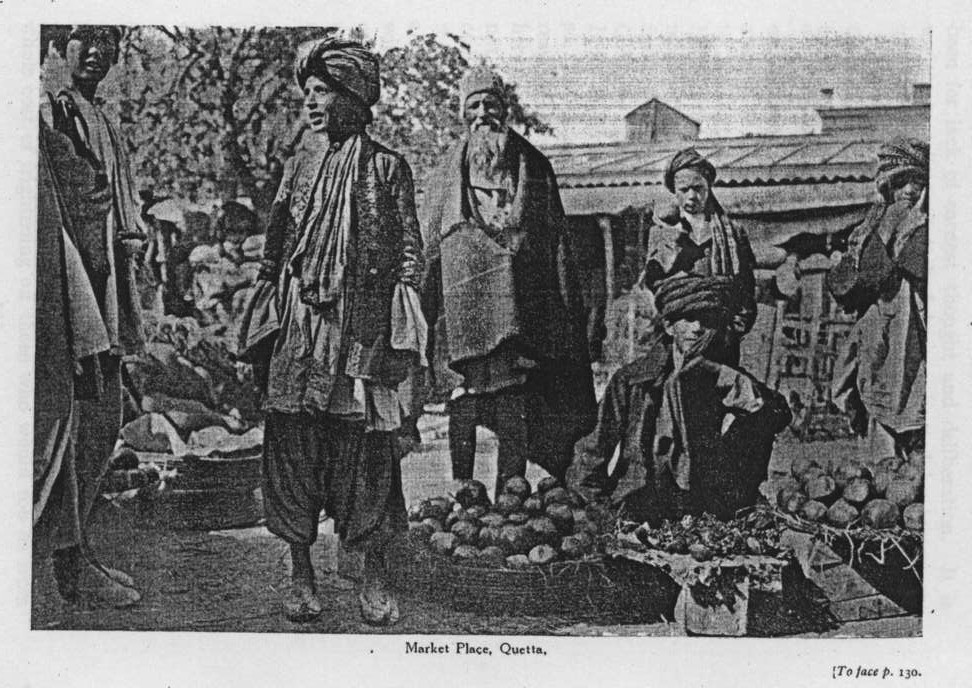
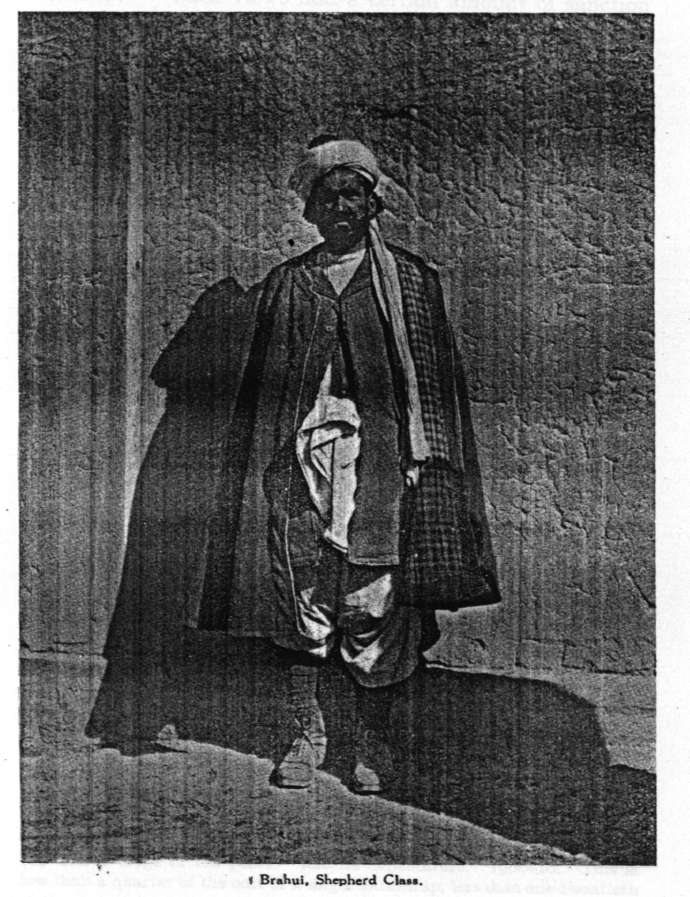
been for lack of earnest thought and deliberation. It is useless to talk as if it had been animated by insane acquisitiveness or reckless and wanton extravagance.
One argument frequently advanced on the side of the Opposition I hold to be clearly fallacious. In his evidence before the Welby Commission (1897), Mr. Gokhale said: " If England thinks that a certain number, of European officers and a certain strength of the European army must always be maintained in India, she must be prepared to pay a fair share of the cost . . . the maintenance of British supremacy in India being a matter affecting the . most vital interests of England." And in his Budget Speech of 1905, in the Imperial Legislative Council, Mr. Gokhale repeated the same argument : " It is said that India is the strategic frontier of the British Empire. If so, the defence of such frontiers is clearly an Imperial responsibility, and India ought to be relieved of part of her present military burdens." In sum, England ought not merely to organize the defence of India, devoting much of her best brain and muscle to the task, and paying enormous sums to keep her communications clear : she ought also to bear part of the actual military expenses incurred within the country, or on the frontier. What part she ought to bear Mr. Gokhale does not say, nor does he suggest any principle on which the proportion should be determined.
This contention can be not obscurely traced back to the idea that India is a source of vast profit to England, or in other words to the theory of the " drain." With its implications stated at length, the argument would run something like this : " Since the peace and security of India are of direct value to England, in order that she may devote herself undisturbed to her work of exploitation, she ought in common decency to contribute to the cost of keeping intruders out of her preserves. Why should the people who are robbing us from within throw upon us the whole cost of frightening off those who would rob us from
without ? " Such views find a certain amount of sanction in the loose talk of the Imperialists who regard the British Empire as an asset and not as a responsibility. But if it be not true that we get from India any more than a very reasonable equivalent for the services we render her,* what becomes of the argument that we ought to pay heavily for the privilege of rendering these services ? We do pay heavily for it, outside India. Our interest in " the Eastern Question " arises mainly, if not solely, from our responsibilities in India ; and what has not that interest cost us ? We assume the entire charge of India's maritime defence except a little over £400,000 * a year It would be rather hard if we had to pay for the defence of her land frontier as well.
It does not appear from whom Mr. Gokhale quoted the saying that India is " the strategic frontier of the British Empire " ; nor is it quite clear what the phrase means, unless that it is the most vulnerable point in the frontier. Mr. Dadabhai Naoroji, in his Presidential Address to the Indian National Congress at Lahore in 1893, put the plea more definitely, in quoting from Lord Roberts two statements to the effect that " the retention of our Eastern Empire is essential to the greatness and prosperity of the United Kingdom," and then asking why, if this be so, the cost of defence should be "to the last farthing thrown on the wretched Indians." That this is far from being the
* If we go back to the eighteenth century, we must of course plead guilty to much " shaking of the pagoda tree." We robbed the native robbers -who were bleeding the country to death ; and here and there we took up and carried on their work. But to quote as applicable to the present day, a phrase of Ruskin's about " our native desire to live on the loot of India," is not, I think, to promote lucidity of thought. Still less is it helpful to endorse without reserve the phrases of Indian agitators who talk of the British as being " day and night engaged in the exploitation of our country and the spoliation of our people."
* The average of ten years' " marine expenditure," 1900-10. This is less than a quarter of the cost of a single battleship, less than one-twentieth of the naval expenditure of Japan, and less than one hundredth part of the naval expenditure of England.
case we have just seen ; but even if it were the case, what country can justly claim to be relieved of the cost of its own defence ? It is not our fault that India is poor.* It is not our fault that she invites invasion. It is not our fault that she has never been able, by her own organization and resources, to offer any sustained resistance to invasion. We place her in a strong defensive position by means of an army of 225,000 men, one third of whom are Europeans. That this force, and the constructions and operations undertaken for securing the frontier, should cost a little over £20,000,000 * a year is no doubt to be regretted, when we consider the poverty of the country; and the Opposition has every right to urge economy and object to unfair charges. Especially may it with reason protest against the throwing upon India of expenses incurred in the service of the Empire in general and not of India in particular. But that is a quite different thing from claiming exemption from expenses incurred in the direct interest of her security. Some of them may have been unwisely incurred ; but that is not the point here at issue. The point is whether England ought to relieve India of a proportion of the outlay necessary for her land defence ; and in that contention I can see no reason.
" But," it may be urged, " the 75,000 British soldiers in India are not really—at any rate not primarily—a force hired to protect the country against menace from without. They are the garrison required to consolidate British rule within the country—to give strength, when necessary, to the ' civil arm.' " No doubt that is so ; no doubt India (by the admission of all reasonable Indians) requires, as yet, protection against internal no less than against external dangers. But is that the fault of England ? Can England be rightly debited with the cost of
* Mr. Naoroji and Mr. Gokhale maintain that it is our fault—a contention we have already examined, and shall return to later.
* Note that at least three-fourths of this sum is expended in India, and can by no manner of reckoning be docketed as " drain."
maintaining peace and order in a country which would certainly never have come under her control had it been able to perform that duty for itself ?
This brings us round again to the suggestion that, on the evidence of Lord Roberts and many other authorities, India is " essential to the greatness and prosperity of England," which therefore ought to pay for her defence. Now it is perfectly true that the prestige and (for a time at any rate) the prosperity of England would suffer considerably by a catastrophic end of her rule in India, whether due to invasion from without or rebellion from within. An unsuccessful war is necessarily a calamity, at any rate in its immediate results; and as the expulsion of the British from India would probably mean the installation of a government (whether native or foreign) hostile to British trade, the blow would doubtless be severely felt in the industrial world. But because the violent overthrow of an existing arrangement would be disastrous, it does not follow that the arrangement in itself is particularly profitable. Apart from the question of trade, it is very doubtful whether we make any clear profit at all out of our connection with India. She is a huge addition to our responsibilities, and she " drains " us year by year of many of our best intellects, returning them to us when their vigour is declining, and when (in many cases) they have formed habits of thought and feeling of doubtful advantage to their British citizenship. Whatever we gain by the connection, except in the way of commerce, is probably a very poor compensation for what we sacrifice. If we are not in India for India's good, still less are we there for our own. There is a certain stimulus, no doubt, in the romance of the adventure, and a certain satisfaction in the sense of work well done, which, on the whole, and despite our critics, we may justly feel. But one need not be a Little Englander to hold that India has tended to check rather than to promote the course of sound development in our national life.
There remains the commercial advantage of the connection : is it so huge, and of such vital importance to us, that we ought, as it were, to tax our profits in order to relieve India of part of the burden of her military defence ? Our trade with India is about 8 per cent, of our total trade ; our exports to India are less than 10 per cent, of our total exports. If we were entirely excluded from the Indian market—and, even in the worst event, that would scarcely be the case—the blow to our commerce would be considerable, indeed, but by no means crushing. Our total trade with the United States-and our total trade with Germany —protectionist countries both—-is in each case greater by many millions than our total trade with India. In the scale of our exports alone, India comes well below both these countries. If, then, we are bound to contribute to the military charges of countries whose trade is valuable to us, we ought to begin with the United States and Germany. With reference to these countries, the suggestion cannot be taken seriously ; has it any greater validity with reference to India ?
There is some evidence, I think, that the Home Government treats India in a niggardly spirit on certain points of sheer accountancy, debiting her with charges which ought, if not in justice, at any rate in generosity, to be borne by England. A prominent case in point is that of the India Office, of which the charges, something like £175,000* a year, are borne by India. This cannot, I think, be called positively unjust, but it has the appearance of being ungenerous, and I believe it would be a measure of wise economy to do away with the small but rankling grievance.
* I take this figure from the Statistical Abstract of British India, 1900-10, p. 71. Mr. Gokhale, in his evidence before the Welby Commission, placed it at £273,000. " The salary of the Colonial Secretary," he said, " together with his official charges, is borne on the Imperial Estimates. ... I am aware, however, that . . . under present arrangements, the India Office has to do much directive and executive work . . . which the Colonial Office is not called upon to do, and I should, therefore, be satisfied if the charges were divided half and half between India and England."
An excellent rule in Anglo-Indian finance would be, " When in doubt, charge England."*
Material Grievances—III.
The third grievance, on the material side, is that of commercial subjection or exploitation. It is very clearly formulated by Mr. Gokhale in his evidence before the Welby Commission : " The resources of our Empire," he said, " are really vast ; but the great difficulty in India is about capital, and we are unable at present to take advantage of these resources ourselves, but our hope is that in course of time we might be better able to spend money in that direction, and then we should be able to utilize our resources for ourselves. At present, owing to the vigorous manner in which railways are constructed, and the way in which foreign capitalists are encouraged to invest their money in India, the result is that we get only the wages of labour, while all the profits that are made are taken out of the country, and our resources are being utilized by others." Mr. Naoroji, who was a member of the Commission, then proceeded to question Mr. Gokhale as to the reason why India was so ill-provided with capital: " Is it not because our capital is carried away from the country ? " " Yes, that is so." "Is not that at the root of the whole thing ? " " Yes, it is at the root of the whole thing." Once more the famous " drain " !
Mr. Gokhale further said that, while he admitted the benefit of the trunk lines of railway, he would have had no further development of the railway system, except such as could be executed out of surplus revenue : that, in a word, he would have had " India make her own railroads." In
* I do not remember to have seen any protest against the item of " Ecclesiastical Expenditure." running to over £120,000 a year. The European community ought surely to pay for its own spiritual luxuries. This item comes under "Salaries and Expenses of Civil Departments." The " Ecclesiastical " expenses of the army, which may fairly be reckoned as necessary, are very much lower.
his Budget speeches of ten to fifteen years later, he criticizes very severely the system of " budgeting for surpluses " and of paying extraordinary expenses (such as those of military re-organization) out of revenue, instead of -by way of loan. There is, to my mind, a great deal of force in his objection to any system of finance which takes from the Indian tax-payer more than is strictly needful for the time being; but it is hard to see how, on this principle, the Indian railroads would ever have got themselves built.
I have read criticisms on details (and important details) of Indian railway finance which seemed, to my inexpert judgment, distinctly damaging. That the Government has now and then entered into disadvantageous bargains, and allowed itself to be " put upon," seems probable enough. But the Indian railways now bring into the exchequer the substantial annual revenue of from £12,000,000 to £14,000,000— far more than half the total of the so-much-denounced military expenditure. It would seem as though the system had not been, on the whole, absolutely ruinous to the country.
But the railways are only a particular instance of the exploitation of which Mr. Gokhale and Mr. Naoroji complain—the exploitation which, to use their own favourite phrase, is reducing them to nothing but " hewers of wood and drawers of water." The real question is whether they are right in arguing that India's assumed inability to provide the capital for her own development is due to the malign influence of foreign rule, and whether, realizing that inability, a wise statesmanship ought to have checked development until such time as India could have paid for it out of her own resources ?
The second half of the question raises an economic problem of great interest. Where it is a matter of choosing between comparatively slow development by (so to speak) home-grown capital, and rapid development by foreign capital, it is very probable that far-sighted statesmanship would choose the former alternative. But this choice would pre-suppose two conditions : first, that the country
could afford to develop slowly : secondly, that, given reasonable time, its people had the energy and the thrift to furnish for themselves the means of development. Were those conditions present in India ? Would not the policy now advocated by the Indian Opposition—the deliberate exclusion of foreign capital—have left the country exposed to far greater evils than those now complained of ? Effective measures of famine relief would have remained impossible ; education would have been enormously retarded; the sense of national unity would have grown very slowly, if at all. I think it may safely be said that the Indian Opposition would never have existed, or at any rate would have remained in the far future, if the Government, fifty years ago, had acted upon the economic principles which it is now reproached with ignoring. It is not accused of having recklessly or corruptly given away valuable rights and concessions to foreign capitalists, or alienated what ought to be regarded as the property of the nation. It is not accused of blindly pandering—after the manner of Porfirio Diaz—to capitalistic greed. All it has done is not to interfere artificially with the natural influx of capital for the development of resources which the Indian people lacked the means, and more particularly the energy, to develop for themselves. The view that it should, or could, have acted otherwise, does not seem seriously tenable.
If, on the other hand, India's lack of capital was due to impoverishment consequent upon British rule, that is a serious, even a terrible, grievance. We have already seen some reason for doubting whether this fundamental theory of the Indian Opposition tallies with the facts of the case ; but it may be well, at this point, to look a little more closely into the whole question of Indian wealth and poverty.
In the first place : is it true that the resources of the country are being exploited exclusively, or nearly so, by Europeans ? When one has seen the palaces of merchants and manufacturers around Bombay and Ahmedabad, and the Calcutta mansions of the zemindars, or landlords,
enriched by the " permanent settlement " of Bengal, one has a little difficulty in compassionating these " hewers of wood and drawers of water." Almost all of the 200 to 250 cotton mills (mostly in Bombay Presidency) have been built by Indian capital, and if the 60 to 70 jute mills of Bengal are mainly in European hands, that is not, certainly, because the Bengalis have no money to embark in such enterprises. It is true that coal mines, tea plantations and gold mines are for the most part owned by Europeans ; but Indian capital and enterprise are largely employed in the production of silk, paper, timber, flour, in oil-pressing and in carpet-weaving. It is not the fact that European enterprise has elbowed Indian enterprise aside ; it may rather be said to have flowed in where the lack of Indian enterprise (far more than the lack of Indian capital) left gaps for it to fill; and it is the fact that Indians are, year by year, securing a larger share of the import and export trade of the country. The Parsis, Bhathias and Banias of Bombay, being born traders, have all along known how to avail themselves of their opportunities. It is not our fault, if the Bengali prefers to live on the income of his lands, and let the European carry on the jute, coal and tea industries. There is an impression abroad that the merchant princes of Bombay Presidency are almost all Parsis. This is scarcely the fact : there are many Hindus and Muhammadans among them : but even if it were the fact, what would it prove ? Not that the British rule prevented Hindus and Muhammadans from profiting by the resources of their country, but that the Parsis, by reason of their greater intelligence and energy, were quicker than their neighbours in seizing opportunities. The Parsi has no special privileges or immunities as compared with other Indians. What a Parsi can do, a Hindu can do—if he has it in him. If he is not in general an alert and enterprising man of business, the fault lies, not with the British rule, but with influences operating through ages before the British rule was dreamt of.
Again, even as to railways, is it the case that India could not, if it would, have provided the capital for their construction ? It did provide the capital for a certain part of them, in the form of loans from three or four Indian princes, on terms said to be not wholly advantageous to the Indian tax-payer. As to the general mass of railway stock, I am not aware of any statistics to show how much of it is held in India ; but if it is a small proportion, the reason must lie in the Indian character. There is no doubt that the hoarded, or, at any rate, the uninvested wealth of India is great, and that rich men, from princes downwards, might do a great deal more than they actually do towards developing the resources of the country. If they lack the enterprise or the intelligence to invest judiciously in joint stock concerns, is that the fault of the British rule ? To say that development ought to have been suspended because India had not the capital to undertake it for herself, is not, at best, very practical; but what becomes of the suggestion should it appear that she had the capital, and forbore to use it ?
One of the proofs of poverty which the Indian Opposition is fond of adducing is the small amount of the deposits in the Post Office Savings Bank. " The total deposits in your Postal Savings Bank," said Mr. Gokhale at the National Liberal Club in 1905, " amount to 148 million sterling, and you have, in addition, in the Trustee Savings Bank, about 52 million sterling. Our Postal Savings Bank deposits, with a population seven times as large as yours, are only about seven million sterling, and even of this a little over one tenth is held by Europeans."* This is certainly a striking contrast; but Mr. Gokhale makes no allowance for his countrywomen's habit of carrying the family savings
* On March 31, 1912, there were in the Post Office Savings Bank 1,500,834 accounts representing over £12,500,000. Government promissory notes to the amount of £517.153 had been issued ; and Postal Life Insurance had been effected to an aggregate sum of £2,022,532. For further, figures showing the steady increase of savings, see Lord Curzon in India, pp. 132, 281.
about their persons in the shape of gold and silver ornaments and jewellery. The European who has not visited India can scarcely believe how universal is this practice, or what a weight of precious metals the Indian woman will suspend at her ears and string upon her wrists and ankles. If India would capitalize her nose-rings alone, her Savings Bank total would go up at a bound.*
After all deductions and qualifications, however, we come at last to the hard fact that the peasantry of India —four-fifths of the population—are as a whole extremely poor, and that many millions live habitually on the brink of starvation. It is time that we should get at the true and ultimate reason of this fact.
THE CAUSES OF INDIAN POVERTY.
The reason alleged by the Indian Opposition is that the ryot has been ruthlessly taxed for a century past in order to pay the " tribute " demanded by his foreign rulers, so that he has all the time grown poorer and poorer, less able to lay by against a rainless day—in other words, against times of famine—and, by reason of impaired vitality, more apt to fall a victim to plague, cholera, malaria and other forms of disease. Nor is this a theory held by Indians alone. It is repeated and worked out by Englishmen in such fantastic figures that one wonders why the whole Indian people is not dead of starvation years ago.
Even when more sanely stated, this argument presents serious difficulties on the very threshold. There is, as we have seen, ample evidence that the Indian peasant was very poor a century ago. 'If, now, you keep on steadily making a poor man poorer year by year, you must come ultimately to the point at which he has nothing left at all; and the fact
* As to the sums lavished on mendicant" ascetics " see Chapter IV., p. 76* "The indebtedness of the ryot is no new thing. Munro in Madras and Elphinstone in Bombay showed at the beginning of the nineteenth century how utterly sunk in debt the ryot was." Morison, Economic Transition in India, p. 79.
that that point has not been reached in a hundred years is of itself sufficient to throw doubt on the theory. Again, it is quite certain that in the eighteenth century, not only was the country tormented by war and brigandage, but many princes and their deputies ground the people most inhumanly in order to meet the costs of their ambition and their luxury. Is it not, indeed, the standing and just reproach against the East India Company, that, before it awoke to its responsibilities, some of its agents connived at, profited by, and even participated in, gross tyrannies of this nature ? If this be so, who can believe that, under a reign of peace and order, legitimate taxation, even if somewhat burdensome, can have such a depressing and impoverishing effect as rapine, pillage, and arbitrary exaction ? If, as a matter of fact, people are not much richer than they were at the end of that chaotic period—much poorer they could not possibly be—must we not suspect some other cause or causes at work, besides the pressure of taxation ?
Going still further back, to the great days of the Mogul Empire, we know that the land revenue exacted by Akbar, Shah Jahan, and Aurungzeb was very much larger than that which has at any time been demanded under British rule.* " Allowing for difference in area and purchasing power of silver," writes Sir William Hunter, " Akbar's tax was about three times the amount which the British take " (in 1893). The land revenue of Aurungzeb after his annexations in Southern India was nearly 38 millions, exclusive of what he drew from Kashmir and Kabul. The land revenue of 1910 -11 was less than 21 millions, probably (though of this I am not quite sure) drawn from a larger area than Aurungzeb controlled. Aurungzeb's total revenue from all sources was estimated in 1695 at 80 millions sterling, and in 1697 at 77 1/2 millions. The total revenue of recent years, ranges somewhere around the same figures ; but from this 20 to 25 millions have to be written off as arising from
* See Hunter's Brief History of the Indian Peoples, pp. 139, 144, 150. I42
sources unknown to Aurungzeb, such as railways, post-office, telegraphs and the opium excise, which is paid by the Chinese consumer.
Even in the absence of precise data, who could doubt that the country was squeezed by the Moguls to a degree unimaginable in these pusillanimous times ? They kept large armies afoot. We know that Shah Jahan and Aurungzeb maintained 200,000 horse and a considerable force of artillery. The infantry, it is true, were weak, but on the other hand there were enormous hosts of camp-followers. Bernier says that they exceeded 200,000 " in the army alone which is with the king." " Delhy and Agra," he added, " liveth of almost nothing but of the soldiery."* The military expenses were partly met by jagirs,or grants of land to leaders who provided contingents —a system which certainly led to great abuses, and cannot at best, have been to the advantage of the cultivator. Expenses of fortification were not slight—witness the vast citadels of Lahore, Delhi, Agra, Allahabad and other places. Court life was lavishly luxurious. Akbar never had fewer than 5,000 elephants and 12,000 stable horses, besides great hawking and hunting establishments. On festival days " the king was seated on his throne in a marble palace surrounded by nobles wearing high heron plumes and sparkling with diamonds like the firmament. * Many hundred elephants passed before him in companies, all most richly adorned, and the leading elephant of each company with gold plates on its head and breast -set with rubies and emeralds. Trains of caparisoned horses followed, and after them rhinoceroses, lions, tigers, and panthers, hunting leopards, hounds and hawks ; the whole concluding
* In another place, Bernier says, " Many -wonder, considering the huge number of persons living of pay (which amounts to millions), whence such vast revenues can be had for such excessive charges ; although this need not be so much wondered at considering the riches of the Empire, the peculiar government of the State, and the said universal propriety of the Sovereign." He means that the Emperor was the universal landlord.
* I own I never saw such inestimable wealth." Sir Thomas Roe. 143
with an innumerable host of cavalry glittering with cloth of gold."* But pageantry probably cost less than the seraglio, to the " incredible expenses " of which, under Aurungzeb, Bernier bears explicit witness. Nor need we search old records for testimonies of Mogul prodigality. The face of the land is covered with their palaces, mosques and tombs, which must have cost huge sums of money, even if the cash payments were somewhat reduced by the employment of forced labour. Go to Fatehpur-Sikri and see the magnificent city which Akbar built only to be abandoned, nobody quite knows why. Return to Agra and view the marble miracle which Shah Jahan dedicated to the memory of the chief lady of his harem. Wander through the exquisite marble palaces of Agra, Delhi, Lahore. Mark the giant plinths upon which such splendid structures as Hu-mayun's Tomb and the Jumma Musjid at Delhi are elevated. Then ask where the price of all these high-piled glories came from, and you will find that it was, for the most part, wrung from the red soil of India. The proportion which arose from mines or manufactures or commerce must have been comparatively small; and if some of it came from the loot of conquered provinces, even that must have sprung ultimately from the soil. Any neglect of economy that could ever be laid to the charge of the British Government shrinks into insignificance when compared with the imperial exorbitances of the Moguls.* " But at least," it may be said, " the wealth which they extracted from their subjects remained in India, and was not ' drained ' away." It did, no doubt; but how much of it came back to the
* Elphinstone: History of India, p. 536. Those who have seen the Lungar parade at Hyderabad, Deccan, can form some conception of the gorgeousness of Mogul pageantry.
* Shah Jahan, says Elphinstone, "was the most magnificent prince that ever appeared in India. . . . His expenses can only be palliated by the fact that they neither occasioned any increase to his exactions nor any embarrassment of his finances." But if his exactions were not increased, this could only mean that they were from the first enormous. His famous "Peacock Throne " was valued at £6,500,000.
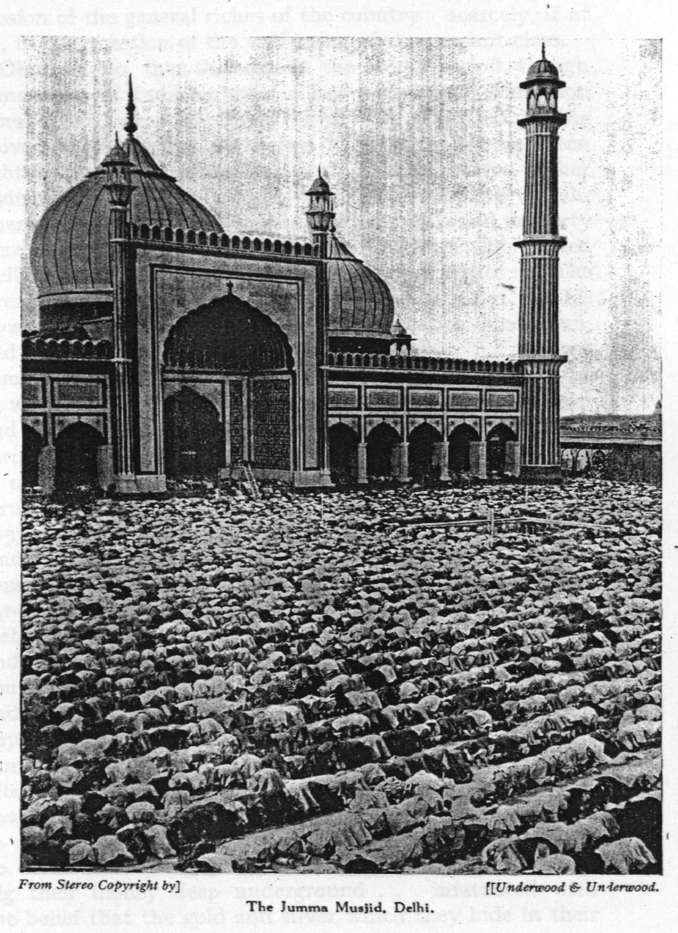
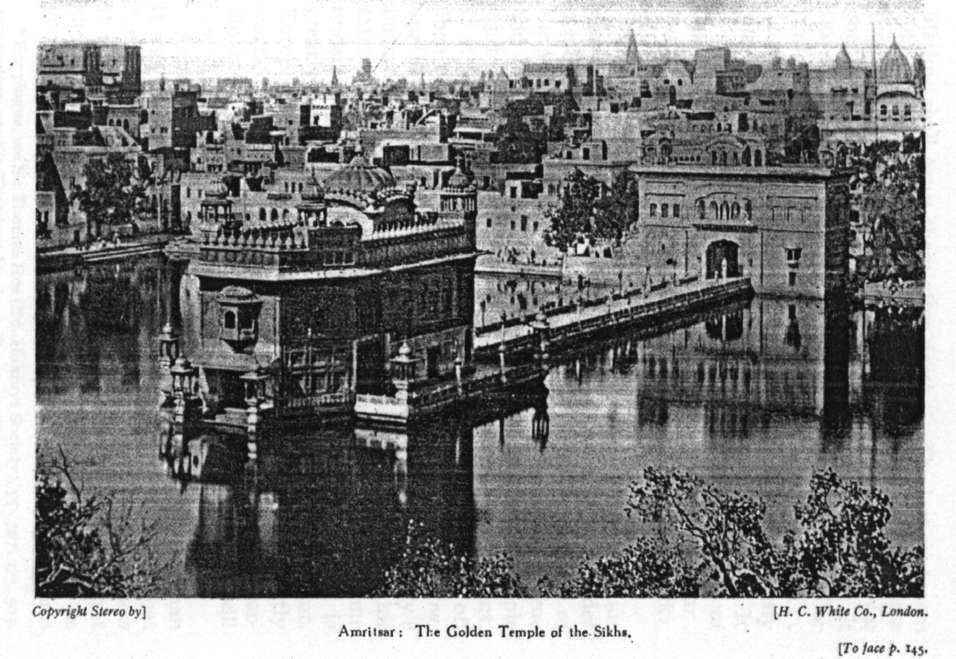
ryot ? The theory of the " drain " is relevant to a discussion of the general riches of the country : scarcely, if at all, to the question of the well-being of the peasant class.
Observe, too, that throughout the Mogul period, though some parts of India enjoyed a fair measure of exemption from actual war, there was never any approach to the universal pacification of to-day. The Moguls were often lighting among themselves, and almost always either trying to extend their territory or to crush rebellious vassals. There was no efficient system of police, and life and property were everywhere insecure. William Hawkins, who visited Delhi in the early years of Jahangir's reign, writes: " The Great Mogul is severe enough, but all helpeth not, for his poore Riots or Clownes complaine of Injustice done them, and cry for Justice at the King's hands. . . . At first coming to the Crowne, he was more severe than now he is, which is the cause that the country is so full of outlawes and theeves, that almost a man cannot stirre out of doores throughout all his Dominions, without great forces." Often, if not always, the land revenue was exacted with unscrupulous rapacity. Bernier, who was in India from 1655 to 1661, notes that there appears " little money in trade among the people : partly because much of it is consumed in melting over and over all those nose and ear-rings, chains and finger-rings, bracelets of hands and feet, which the women wear " ; partly because " Governors and [tax] farmers have an absolute authority over the countrymen, and even a very great one over the tradesmen and -merchants of the towns, so that . . . there is not any person to whom a countryman, tradesman or merchant can make his complaint in cases of extortion and tyranny often practised upon them by the soldiery and the governors. . . . Whence is it that ordinarily they affect, to appear poor and moneyless . . . and at last they find no other remedy to secure their wealth than to hide and dig their money deep underground . . . infatuated with the belief that the gold and silver which they hide in their
lifetime shall serve them after death." The last sentences evidently apply rather to the urban middle-class than to the peasantry. But the same acute observer goes on : " Tyranny often grows to that excess that it takes away what is necessary to the life of a peasant or tradesman, who is starved for hunger and misery. . . . The land is not tilled but almost by force, consequently very ill, and much of it is quite spoiled and ruined." It is true that in this passage Bernier is speaking rather of Oriental countries in general than of India in particular ; but it is the condition* of India which suggests his remarks, and he makes no exception in her favour.
We see, then, that, under the Moguls, an enormous revenue was raised, often by very oppressive methods and under conditions far less favourable to the peaceful cultivation of the soil than those of to-day. It may be added that plague and famine were by no means unknown,* though people paid much less attention to them than they do at present. Is it for a moment credible that the ryot was better off then than now ? He was not : he suffered, then as now, apathetically and uncomplainingly ; and it was nobody's business either to relieve his hardships or to bewail his fate. To this day it is only the class which has come under the influence of European humanitarianism that is greatly concerned about the sufferings of the peasant. European officials engaged in famine work are frequently startled by the fatalistic indifference of their Indian subordinates. " Why trouble about this carrion ? " they will say : " It is the will of the gods."
Assuredly the lot of the peasant is not worse to-day than it was in the brave days of old ; but the fact remains that it ought to be very conspicuously better, and that somehow it is not. Taking India all round, it cannot be said that the position of the cultivator is satisfactory. There is conflict of evidence as to details. The official view seems
* For plague, see Sir Thomas Roe (Ed. Hakluyt Society), pp. 307,375, 505. For famine, see Sir Theodore Morison, Economic Transition, pp. 105-116.
to be" that in some parts of the country, at any rate, the ryot shows greater recuperative power after a bad season than he formerly did :* the Opposition view is just the reverse. Some people hold poverty to be systematically exaggerated (as Bernier says it was in the seventeenth century) and talk, with Mr. Kipling's philosopher, of the " bloomin' garib admi swindle." But the main fact is only too evident, namely, that large masses of the agricultural population are in a condition of stagnant indigence and indebtedness, and that the failure of a single season's crops deprives them even of the handful of pulse which is all they require to keep body and soul together. Why is it that vastly improved external conditions have not brought with them a striking advance in prosperity ?
The reason, in my view, is simple : namely, that the benefit of good government is, in part at any rate, nullified, when the people take advantage of it, not to save and raise their standard of living, but to breed to the very margin of subsistence. Henry George used to point out that every mouth that came into the world brought two hands along with it; but though the physiological fact is undeniable, the economic deduction suggested will not hold good except in conditions that permit of the profitable employment of the two hands. Can they, by increasing the efficiency of cultivation, increase, in the necessary ratio, the productivity of a given portion of soil ? Or is there fresh soil for them to till ? Or can they be applied to the production of commodities exchangeable for food ? Under present conditions in India, taking it all round, the answer to these questions can only be a qualified affirmative. The study of intensive cultivation has not yet yielded great results, and the peasantry lack the intelligence, the energy and the capital to profit by such methods as have been devised. In many parts there is no new land to be taken under
* Speaking from their own observation, many British officials of long experience assert unhesitatingly that the peasantry in general are now better clothed, better fed, and better able to afford the small conveniences of modern life, than they were thirty years ago.
cultivation ; and, where expansion is possible, it is to be presumed that, except where irrigation comes into play, the new land is of inferior quality.* As for manufactures, though they do in some measure relieve the strain upon the soil, they are as yet so little developed that the effect is scarcely felt.* When India first came under British control she was already well-populated. She had not, like the United States at the same period, or Canada to-day, enormous powers of expansion. She had not immense mineral resources to supplement the resources of the soil. She had not an eager, energetic, provident breed of agriculturists, quick to seize upon every method of saving labour and increasing produce. What she had was a multitudinous peasantry, frugal, indeed, inasmuch as its daily wants were small, and industrious in a languid, mechanical way, but wasteful in its social habits, incapable of foresight or rational thrift, preyed upon by usurers and parasites, and regarding procreation as the most sacred of all duties. It is true that its marriage customs did not really make for healthy fecundity, and that there were many checks upon increase which would not have been operative in a more enlightened community. Still, peace and order did their work, and the population steadily grew. Though every million mouths was accompanied by two million hands, that was far from meaning that production increased twice as fast as consumption. There must have come a point after which the hands failed even to keep pace with the mouths; and, as the utmost margin of productivity was approached, each new pair of hands meant a relatively diminished return.
* " In 1880," said Lord Citrzon in 1901, " there were only 104 millions of acres under cultivation in India. There are now 217 millions, or an increase in virtually the same ratio as the increase in population." The average quality of the additional 23 million acres does not appear. If it was better than that of the 194 millions the result would be a real addition to the resources of the country.* But the chances are that the average quality was poorer, in which case the ratio between population and subsistence was, altered for the worse.
* In 1911, the total number of persons employed in factories fell something short of 850,000.
This being so, what wonder that the mass of the people remained poor •? The root of Indian poverty lies in the fact that the people at large have no will to be rich, or even well-to-do. Not till they learn to " want more wants " will they learn to take thought how to supply them.
The argument of the foregoing paragraph may be thus summed up : The productivity of a given portion of soil is a function of three factors: natural quality (including climatic conditions), artificial methods, and the labour required to apply these methods. The first two factors remaining constant, there is a limit to the amount of the third which can profitably come into action. If ten pairs of hands are sufficient to extract from a field all that its natural quality and the prevailing methods will enable it to produce, fifteen pairs of hands will reap no richer harvest, but will reduce by a third the quantity of grain assignable to each mouth.* If the additional five pairs of hands can break new soil, so far good ; but, under Indian conditions, the chances are that the new soil will be poorer, and the share of each of the fifteen will still be less, perhaps very much less, than the shares of the original ten. This, I suggest, is a picture in little of what is constantly going on in India—the population is constantly tending' to outpass the limit of profitable employment upon the soil.*
* I am told that this is an inaccurate representation of the Law of Diminishing Returns ; but I do not think it substantially misrepresents the facts of the case.
* The land-revenue statistics of the past fifty years may seem, at first sight, to conflict with this theory, showing, as they do, an increase proportionally greater than the increase of population. From this it would seem to follow, either that the share of produce claimed by the Government has greatly increased, or that the additional population has found means to make more than a proportional addition to the produce of the land. Now the share exacted in taxation has certainly increased very little, if at all; wherefore we would seem to be thrown back on the other alternative. But the surface meaning of the figures proves, on examination, to be wholly misleading. To interpret them aright we have to take into account, firstly, the fall in the value of the rupee, secondly, the rise in prices. " The total increase in the gross land revenues during the past fifty years," says a Government memorandum of 1909, " has
Mr. Dadahhai Naoroji, in his presidential address to the Indian National Congress of 1893, quoted this passage from Macaulay : " To trade with civilized man is infinitely more profitable than to govern savages ; that would indeed be a doting wisdom which, in order that India might remain a dependency, would . . . keep a hundred millions of men from being our customers, in order that they might continue to be our slaves." After the words " a hundred millions " Mr. Naoroji inserted in parenthesis " now really 221,000,000; " but it does not seem to have occurred to him- that in this vast increase, unaccompanied by a commensurate increase of productivity, whether of food or of commodities exchangeable for food, he had found the key to the poverty which he and his fellow-congressmen were always (and rightly) bewailing. It is probable that Macaulay's rough estimate of 100,000,000 was under the mark, and that the population had not actually increased by 120 per cent. But even if we reduce that figure by one-sixth and assume an increase of 100 per cent., is it not manifest that this must mean a terrible strain upon resources at no time over-abundant ?
And, spite of famine, plague, malaria, child-marriages, and all the ills that Indian life is heir to, the increase still goes on. After deduction of the figures for areas not previously enumerated, the increase of the thirty years between 1881 and 1911 works out at a little under 50,000,000 —just about the whole population of over-populated Japan.*
been 60 per cent., measured in rupees ; but, as the gold value of the rupee has fallen from 24d. to l6d., the increase, if measured in gold, is less than six per cent." And again, " As wheat has risen in value by 100 per cent., a given money assessment now represents a very much smaller portion of the produce than in 1858." I do not know that exact figures are available, but there is little doubt that the increase of land revenue, measured in produce, is smaller in proportion than the increase either of population or of cultivated soil.
* This means that, assuming the India of-1881 to have been just able to support herself, with very little over, a development of her resources, equivalent to the whole resources of Japan, ought to have taken place in thirty years, if she was not to find herself sensibly poorer per head of population."
The decade 1901-1911 witnessed an increase of over 19,000,000 ; twelve and a half millions in British territory, six and a half millions in States and Agencies. The potency of the check exercised by famine and disease is apparent in the extraordinary fluctuations of the rate of growth. Mr. E. A. Gait, director of the Census of 1911, after ehrninat-ing all causes of error, estimates the real increase between 1872 and 1911 as follows :
1872-1881 . . . 3,000,000
1881-1891 . . . 25,000,000
1891-1901 . . . 4,300,000
1901-1911 . . . 19,000,000
Referring to the assertion that Indian fecundity is less than " normal," Mr. Gait points out that " there is no such thing as a normal rate of increase. All that can be said is that since 1872* the average increment has been about 5 per cent, per decade "—which is less than that of the Teutonic races and greater than that of the Latin races. It is obvious that a country subject, as India is, to pestilence and calamitous drought, is not likely, other things being equal, to show so large a rate of increase as countries in which better climatic and hygienic conditions prevail. But such comparisons are irrelevant to the present question. We are not discussing the relative prosperity of India and other countries, but simply considering the fundamental equation between mouths and food. If mouths increase in a higher ratio than food, the tendency must be towards greater poverty, no matter what may happen in other parts of the world.*
* Up to which date no exact statistics were available.
* The views expressed in the above paragraphs are in general borne out in a singularly able book, entitled The Population Problem in India, by Mr. P. K. Wattal, of the Indian Finance Department (Bombay: Bennett, Coleman & Co. 1916). I cannot too strongly commend to all who are interested in the subject this intelligent, lucid and thoroughly well-informed study. (1917.)
We have seen above that, both in area and in population, India is practically equal to the whole of Europe minus Russia. If, now, we consider what an immense proportion of the people of Western Europe are concentrated in towns, and are occupied in manufacture and trade—drawing their sustenance, that is to say, largely from other portions of the worlds—is it not evident that the strain upon the soil must be incalculably greater in India than in Europe ? India imports food-stuffs (mainly sugar) to the value of some ten millions a year; but she exports food-stuffs (mainly rice and wheat) to more than double that value; which means that she feeds not only herself, but a considerable number of other people, from her soil alone. Here, no doubt, is a real " drain,"* a symptom of unsatisfactory economic conditions, to which over-taxation may possibly contribute ; but this is not the same thing as the alleged " drain" in payment or over-payment for services.
I am not denying that if such over-payment exists—if security, stability and good administration could be bought at a cheaper rate—the over-payment must help to impoverish the country. If my argument in preceding sections holds good, India buys her defence and administration far cheaper than most other countries ; and the fact that these benefits have, for the present, to be in some measure purchased from abroad, is her misfortune, not our fault. This does not prove, however, that good government might not be bought on even more advantageous terms ; and still less does it prove that the government for which India pays might not be a better, wiser, more far-seeing government. In pleading for economy, and in urging measures conducive to general well-being, the Indian Opposition is performing a natural and laudable
* Many people hold that it ought to be checked by restrictions on the export of grain ; but economic experience seems to show that this is an illusory remedy, inasmuch as " any enactment which artificially lowers the price reduces the quantity of grain raised in a country." SeeMorison, Economic Transition, Chap. V.
function ; nor would one quarrel with it because its arguments are sometimes one-sided and its recommendations not always practicable. But I suggest that its remonstrances would be far more telling (and perhaps a little less querulous) if it did not close its eyes to the fundamental fact that over-population lies at the root of Indian poverty, and that Government is not to blame for this, except in so far as good government removes the checks upon fecundity which bad government incidentally imposes. Roughly speaking, the population of India has doubled under British rule : could there be a more conclusive testimony to its general beneficence in all matters which government can control ? That the thrift, the prudence, the energy, the intelligence of the mass of the people have not similarly increased may, indeed, be partly attributable to government, which may not have done all that was ideally possible for education and economic progress. But every reasonable Indian must surely admit that no government can remake a people ; they must do that for themselves. So long as the Indian people, remaining dependent on the soil, continue to breed up to the margin of subsistence in good seasons, they will continue to suffer in bad seasons.* Here is a very significant passage from Baden-Powell's great work upon The Land-Systems of British India
" Nothing can be more curious than the result of a low assessment, whether fixed for ever or not. In one large district at least, where a low assessment was secured for thirty years, the result has been, not that a wealthy class has arisen, but simply that all
* The true meaning of famine is thus clearly stated by Sir Theodore Morison : " When the monsoon rains fail, Nature pronounces a lock-out in the agricultural industry that throws ninety per cent, of the population of the district affected out of work for the whole year." Famine relief, now admirably organized and administered, may minimize the actual mortality ; but famine relief can only mean, of course, a sort of national insurance against the effects of drought—a spreading of the loss over the whole land, those parts which do not directly suffer being taxed for the benefit of those which do.
restraint has vanished and the poor population has multiplied to such an extent that the wealth accumulated is not more able to support the increased mass of people than the former resources were to feed the then existing numbers. Under native custom, properties become sub-divided and again sub-divided till their value is frittered away ; the money-lender steps in, and land begins to aggregate in the hands of a class alien to agricultural knowledge and interests. ... I must add the notorious fact that in well-managed Native States, where the revenue is double, perhaps four times, as high as in British districts, the people are apparently as prosperous."
Need we look any further for the main reason of the poverty in India ? In the face of these facts, can we plausibly attribute it to over-taxation ? Mr. Gokhale would make Government further responsible for two subsidiary facts : the decreasing fertility of the soil and the increasing death-rate. He tells us that " over the greater part of India agriculture is, as Sir James Caird pointed out more than twenty years ago, only a process of exhaustion of the soil," and he declares that in the twenty years from 1885 to 1905, the average annual death-rate increased by " no less than ten per thousand." Assuming the facts to be as stated, where does the responsibility of England come in ? Is it the fault of the Government that from time immemorial the people of India have used cow-dung for fuel instead of for manure—have flushed their floors with it instead of fertilizing their fields—and have multiplied to such a point as to render it almost impossible to give the land its necessary periods of rest ? It may be said that a far-seeing Government would have taken steps to provide other sorts of fuel, and perhaps other sorts of manure as well. But I have not seen this point urged by the Opposition: I have not seen any positive and constructive remedial measures proposed. It is so much easier to cry out upon the rapacious settlement-officer, and to assume that all would be well if peace, order and material development could be had for nothing. As for the high death-rate, poverty no doubt contributes to it by rendering
the people less able to resist the ravages of plague, malaria and other diseases. If Britain is responsible for India's poverty, then she is responsible for whatever part of the death-rate is fairly attributable to poverty ; but it is unreasonable to bring this forward as a separate charge, an additional subject of reproach. If, on the other hand, the responsibility for Indian poverty rests, not with Britain, but with the Indian people themselves, it is not merely unreasonable but unjust to lay the high death-rate at the door of the Government. British rule has brought with it medical science, the rudiments, at any rate, of sanitation, and a network of hospitals and dispensaries at which from twenty-five to thirty million patients are annually treated. It may, indeed, be argued that Government has not done all that was possible in the way of forcing sanitation upon a very recalcitrant people ; but sanitation costs money, and any extra expenditure would have meant either additional taxation or the diversion of funds from other purposes. " Why not from defence ? " the Opposition cries —and so the endless wrangle goes on. It is, of course, impossible to prove that Government estimates rightly the relative urgency of the different objects to which it devotes its resources ; but it is hard to imagine any apportionment at which no one should be found to cavil.
Emigration.
In the question of emigration we find a long-smouldering grievance which has recently become acute. Here we must carefully distinguish between two very different points at issue.
India has every right to insist upon fair and humane treatment for those of her people who have already been induced or allowed to emigrate ; and the Government of India, though placed in a difficult and delicate position, has not been slow to take up their cause. But when Indians interpret the word " Empire " as implying the right of
unrestricted, immigration into any country under the British flag, the reply must be, in the first place, that " Empire " does not connote any such right, and, secondly, that it would not be to India's advantage if it did.
Can India reasonably look to emigration as one of the remedies for the evils from which she suffers ? I submit that, in the present condition of the world, the remedy is impossible, and that, if it were possible, it would be illusory. "Why is it impossible ? Because there is no part of the habitable globe where India can spill her overflow in such numbers as sensibly to relieve the congestion at home, unless she is prepared to conquer territory and subdue or exterminate the existing occupants. Why is the remedy- illusory ? Because it would merely postpone the facing of her population-problem, which India must assuredly undertake before she can claim her due place among the civilized nations of the world.
Is it conceivable that South Africa, Australia, or Canada should permit, except at the sword's point, the invasion of their territory by such hordes of Indians as should appreciably alter the proportion between mouths and food in India ? There are, between Kashmir and Cape Comorin, over three hundred million people. Suppose 4 per cent, of them, or 12,000,000, were to emigrate, what difference would that make in India ? In a single decade (supposing no very grave calamity to intervene) the population would have risen at least to its former level. But 12,000,000 is very little short of the whole white population of South Africa, Australia, and Canada. Is it for a moment to be imagined that these countries would submit to having their whole policy, their conditions of life and course of development, altered by such a huge influx of an alien and unassimil-able race ? Of course, this is a flagrantly impossible contingency ; but that only makes it all the clearer that no emigration which is practically conceivable would sensibly ameliorate Indian conditions. Any outflow that should be at all perceptible in India would mean, in other
countries, an inflow amounting to a cataclysm. But suppose emigration on a large scale were possible—suppose, say, that a new India could be set apart in Africa, capable of absorbing a million immigrants a year for the next half century—would that be a real and permanent benefit to the Motherland ? On the contrary, it would be a misfortune. It would indefinitely adjourn the day when India shall realize that life is to be valued by its quality, not its quantity, and that a country which would be master of its fate must first be master of its instincts. Of course, this is a lesson that many other peoples are far from having taken to heart; but India has not even begun to learn it. She is still unquestioningly devoted to that religion of fecundity which she must one day modify unless she is prepared to conquer the world.
Let it be realized that this is no mere rhetorical phrase. The world, indeed, is not yet overfilled; but the limits of possible expansion are being rapidly approached ; and practically all desirable territory is staked-out by people who naturally propose to reserve it for development along the lines of their own racial traditions. It is quite certain that only by force of arms can this right of reservation be infringed ; and its successful infringement, in a series of " folk-wanderings," would mean a relapse into chaos.
No member of the Indian Opposition (so far as I am aware) has manifested any clear insight into the importance of the population question in its bearings upon the true welfare of the country. Nor can it be said that European observers have shown themselves keenly alive to it. Sir Valentine Chirol, in his book on Indian Unrest, lays it down without the least hesitation that " her inexhaustible supplies of cheap labour are India's greatest asset." In almost the same words a Bombay manufacturer (Muhammadan) remarked to me, " The greatest asset of India is her three hundred millions." But how is it possible that cheap labour can be a real " asset " to a country ? To her capitalists, no doubt, it may be, though India forms no
exception to the rule that cheap labour is bad labour. A vast proletariat, with a low standard of living, will doubtless help to swell those imposing battalions of figures which prove what may be called the statistical prosperity of a country. But statistical prosperity has very little to do with real well-being. To say that cheap labour is India's asset is practically the same as saying that poverty is India's wealth. And while the ryot does not mind how poor he is, so long as he can be prolific, it is certain that he, at any rate, will know no other form of wealth.
But emigration, on any considerable scale, being fortunately impossible, a time must one day come when (with the help of vernacular education) the peasant will learn that, beyond a certain point, every additional pair of hands mean a diminishing return, whether in produce of soil or in wages, and will gradually adjust the equation between labour and remunerative opportunity. He will learn to " want more wants," and will rise above that extreme of frugality which may rather be called apathy. Then India will be on the high road to real wealth—not that wealth which consists in the exploitation of her " greatest asset."
" But what about irrigation ? " it may be asked. " Might not she still add indefinitely to her 300,000,000 if the Government did not culpably neglect irrigation in order to multiply railways ? " Unfortunately—or, in my view, fortunately —there is a limit to the potentialities of irrigation, and experts declare it to be well within sight. Redistribution of population might no doubt permit of a certain amount of increase without any further pressure on the margin of subsistence ; but in a country where local attachments are so strong, and differences of race, caste and language so many, redistribution is no easy matter. Sooner or later, at all events, the pinch must come, and India must learn, that her salvation lies, not in numerical expansion, whether within or without her boundaries, but in the intensification and ennoblement of life.
The moral grievances on which the Indian Opposition is in the habit of dwelling may be classed, like the material grievances, under three heads :
(1) Neglect of education.
(2) Exclusion from civil employment.
(3) Denial of opportunity for military training.
Moral Grievances—I.
The first and second complaints I shall not here discuss at length. On the question of education there is a good deal to be said in another chapter. For the moment, it may be sufficient to point out that when Indian extremists accuse the Government (as they sometimes do) of deliberately keeping India in darkness, for its own oppressive ends, they are talking very wildly. As regards Western education, with English as its medium, the Government is open only to the reproach of having supplied, with perhaps inconsiderate lavishness, an article which, though not very satisfactory, was the best it had to give. In the face of numberless warnings that it was thereby sapping its own position,* it deliberately set about the creation of that educated class, to which, as the prophets foretold, we owe " the unrest " of the present day. It might easily have satisfied its conscience by promoting only Oriental education—a course which many people urged upon it, as its one clear duty. By this means it would have saved itself a great deal of trouble, and indefinitely retarded the development of India, both intellectual and material. But it chose the other course, and called into existence the many excellent Government servants of to-day, as well as the less fortunate multitude who bitterly complain because, having invested so-and-so many rupees in the attainment of a B.A. degree, or in the failure to attain one, they find that the lucrative
* See the views on this point of Elphinstone, Metcalfe and Lyall, pp. 283-285. These are only specimens of a host of similar utterances.
posts to which they thereby consider themselves entitled are not unlimited in number. The educational system established some sixty years ago might no doubt have been -very much better; but its defects were those of English education in general, which the Government of India could scarcely be expected to reform. In this department, in short, whatever criticisms of detail may be admissible, the Government cannot reasonably be charged with any lack either of diligence or of good will.
In vernacular education, on the other hand, it is true that little has been done in proportion to the vast work that remains to be done. Here it is that the Indian Opposition has a plausible case. It may be argued that, in spite of the poverty of the country, in spite of the indifference, if not hostility, to education displayed by the people themselves, the Government ought to have done more to combat the general illiteracy.* To this end, either fresh taxation would have had to be imposed, or large sums must have been diverted to education from defence, public works, and other heads of expenditure. The latter is, of course, the policy urged by the Opposition; and it is clearly impossible to prove them wrong. At the same time, one would be more willing to accept their judgment, if it were not evident in many other ways that they are unduly, if not unnaturally, jealous of any and every expenditure incurred by Government in the interests of its own security and prestige. When one regards a given institution as a necessary evil, one is apt without desiring its overthrow, to scrutinize with a grudging eye every halfpenny of the sums allotted to its maintenance. This being so, it is scarcely possible that the Opposition and the Government should agree in their estimate of the relative importance of the various objects of public expenditure. The Government, at all events, is now definitely committed to a large and liberal policy in regard to vernacular education ; and such is the difficulty of the problem that, for my part,
* For statistics, see p. 244.
I would urge a slow, cautious and thoroughly well-prepared advance, rather than a hasty multiplication of ill-provided schools and incompetent teachers.
Moral Grievances—II. Exclusion from
Civil Employment.
Perhaps the bitterest complaint of the Opposition is that, according to them, the Government has made a dead letter of the following clause in Queen Victoria's Proclamation of 1858, often called the Magna Charta of India:
It is our will that, so far as may be, our subjects, of whatever race or creed, be freely and impartially admitted to offices in our service, the duties of which they may be qualified, by their education, ability and integrity, duly to discharge.
This mandate has certainly not been made a dead letter ; but there may have been a tendency to take a narrow and prejudiced view of that fitness for the discharge of official duties on which the Proclamation naturally insists. A Commission has been inquiring into this question for two years, and its report is now eagerly awaited.* This being so, it would be folly for me to attempt any detailed discussion of the subject. I may, however, briefly note the impression left on my mind by many conversations, both with Englishmen and Indians.
* That report has now appeared. The proposal of the Commissioners as regards the Civil Service is that " roughly three-quarters of the superior posts be recruited for in England and one-quarter in India." In the public works and railway (engineering) departments, they propose that " provision be made for obtaining half the staff from India." I cannot find that materials are given for a very exact comparison between the results to be produced by these proposals and the existing state of things. It appears, however, that in 1913, of officials drawing salaries of £400 a year and upwards, 19 per cent, were Indians, while of officials drawing (roughly) £600 a year and upwards, 10 per cent, were Indians. As most, if not all, of the " superior posts " alluded to will probably fall within the latter class, it appears that the proposal is to raise the propor tion of such posts held by Indians from 10 per cent, to 25 per cent, of the whole. (1917.)
Again and again I have put to British officials the question, " Do you know any Indians whom you consider to be capable of more important employment than they actually hold—employment of high responsibility ? " The answer has almost always been, " Yes, I know two or three." The inference seems to be that the Government has, at any rate, not proceeded with any undue rapidity in the promotion of Indians to places of trust. On the other hand, there is no reason to doubt the sincerity of its often-repeated desire to advance in this direction as far as prudence will permit. Many of the most distinguished administrators have expressed themselves, both in private and in public, strongly in favour of the policy of the open door. Sir Alfred Lyall, for instance, writes in 1882 : " I have just appointed a native judge to the Allahabad High Court, the first who has ever been sent there. I want to push on the native wherever I can—our only chance of placing Government here on a broad and permanent basis." Some of the highest judicial appointments are, and have long been, held by Indians, and that with great distinction. There is a pretty general opinion that Indians are better fitted, as yet, for judicial than for executive functions ; and one can easily understand that this may be true.
The question at issue, in any case, is not one of principle, but only of rate of progress. It is certainly at first sight a grave injustice that admission to the higher branches of the Civil Service should be impossible to Indians who have not the means to present themselves for examination in London. The objection to simultaneous examinations in England and India which is commonly alleged by Anglo-Indians is in a sense flattering to Indian self-esteem. " The Hindu has such a prodigious memory," it is said, " and is so clever at examinations, that the Englishman cannot stand up against him. But the ability to shine in a competitive examination is not in itself a proof of either the character or the talent required in administrative work ; and an English candidate who may be defeated by a few
marks is much more likely than his Hindu rival to develop these qualities." As matters stand at present, there is something in this argument. It may be maintained that the voyage to England is in itself a valuable part of the test of fitness to which Indian candidates ought to be subjected. The poor, no doubt, are thereby absolutely excluded ; but they could scarcely qualify even for simultaneous examinations. If young men of the wealthy and well-to-do classes have not sufficient will and energy to undertake the journey, the inference is (it may be said) that their character does not fit them for responsible positions. It is certainly hard to conceive that an Indian who was prevented by religious scruples from crossing the kala panicould be an efficient administrator.
On the whole, and with all sympathy for the natural impatience of educated Indians, I do not find it proven that Government could, with advantage to the common weal, have gone much faster and farther in this matter than it has actually done. But, whatever may be the recommendations of the Commission, I cannot doubt that henceforward every effort should be made to educate, and to employ in responsible posts, a large class of efficient Indian civil servants. This is evidently an indispensable preliminary to that fitness for self-government which, in my view, both principle and policy should urge us to promote. So long as the opposite ideal is dominant—so long as our rule is supposed to be justified by an incurable incapacity for self-direction on the part of the Indian people—it is clear that every official of Indian race labours under a very severe disadvantage. He is handicapped even in the eyes of his own people, who are apt to criticize his proceedings as those of an amateur, admitted by some fluke to the heaven-born ruling caste. There is no reason to doubt the anecdotes one frequently hears of the preference for " sahib " officials, sometimes amusingly manifested by Indian villagers. But this is a state of things which is probably changing of its own accord, and which, in any case, we should
make it our business to alter. The encouragement, and not the depression, of every legitimate form of Indian energy should be the constant aim of a wise government. We should try to abridge, not to protract, the term of our trusteeship. But one proviso should perhaps be suggested—namely, that the growth of a class of competent Government servants would not necessarily imply the fitness of the country for independence. It is possible, and even probable, that such a class may have come into existence long before national unity is firmly established and the mass of the people is sufficiently civilized to dispense entirely with external influence and guidance.
Moral Grievances—III. Denial of Opportunity for
Military Training.
For an official statement of the third grievance, I turn once more to Mr. Gokhale. In his Budget speech of 1906 he said :
Japan's ordinary Budget for the army is only about 37.3 millions yen* or a little under six crores of rupees. And for so small an expenditure it has a standing army of 167,000 men, with reserves which can raise it to over 600,000 men in time of war. We spend nearly six times as much money a year, and yet in return for it we have only an inexpansive force of about 230,000 men, with about 25,000 native reservists, and about 30,000 European volunteers ! Both on financial and on political grounds, therefore, our present unnational system of military defence is open to the gravest objection. My Lord, I respectfully submit that it is a cruel wrong to a whole people—one-fifth of the entire population of the world —to exclude them from all honourable participation in the defence of their hearths and homes to keep them permanently disarmed, and to subject them to a process of demartialization such as has never before been witnessed in the history of the world .*
* If this figure was correet in 1906, Japan's military expenditure must have doubled in six years. In the Budget of 1912-13 it stands at 76,790,438 yen, while an additional 17 1/2- millions are put down as " extraordinary " expenditure.
* " Japan," Mr. Gokhale continued, " came under the influence of Western ideas only forty years ago, and yet already under the fostering care of its Government, that nation has taken its place by the side of
Again, in his Budget speech of the following year (1907), Mr. Gokhale said, " The wrong inflicted on all classes of the Indian community indiscriminately by keeping them com-pulsorily disarmed—thereby slowly crushing all manhood out -of a whole race—must be cautiously but steadily set right."
In this argument we have a typical example of three habitual practices of the Indian Opposition : (1) Appealing to the experience of Japan, while ignoring the heaven-wide difference between the conditions of Japan and those of India, (2) Assuming, in defiance of all the evidence, a general superiority of the past over the present. (3) Admitting, in one breath, the necessity, for an indefinite time at any rate, of British rule, and in the next breath complaining bitterly of measures plainly indispensable to its continuance.
Japan is, of all countries, the most unlike to India. The Japanese are more nearly homogeneous than any other nation on earth. They have inhabited their islands since the dawn of history. Though they themselves were doubtless invaders in the first instance, no other invader has ever set foot on the soil of Nippon. They have always been in theory, and generally in practice, a single nation, united under one ruler, who is at present the object of universal and passionate loyalty. The two religions they profess are not mutually exclusive, but subsist together in unbroken harmony. Japan, in short, is, both historically and actually,- the most perfect example in the world of national unity, while its power of self-protection and self-direction is conspicuous and indubitable. In all these points—and they are fundamental—India presents the most glaring contrast. I need not recapitulate the differences ; let me only say that it is impossible to name a single resemblance or analogy, historical or actual. Why,
the proudest Nations of the West. We have been under England's rule longer than forty years, and yet we continue to be mere hewers of wood and drawers of water in our own country, and, of course, we have no position anywhere else."
then, attempt to argue from the one country to the other, and reproach the Government of India for not imitating the Government of Japan? If the racial, geographical and historical conditions of the two countries were in the least alike, the English would not be in India at all. Since they are there, they must act in accordance with the conditions of India, and not of Japan.
What, now, of the " demartialization of India," the "crushing of its manhood? " One would naturally conclude from such language, that England had found in India a highly-developed system of citizen service, and had deliberately put it down. As a matter of fact, India is as " martial" to-day as she ever was, except in so far as she no longer offers a happy hunting-ground for armies of robbers and marauders. She has 150,000 Indian regular troops, 20,000 Imperial Service troops and nearly 40,000 reservists—an army practically equal to the estimated hosts of the Mogul Emperors, and far superior to them in discipline, appointments and every essential of soldiership. True, there were other armies in India in the Mogul period ; but so there are to-day. The troops of the Indian princes may not be very efficient, but at least they are not denied the advantages (such as they are) of military training. Again, there is an army in India to-day of which the Moguls knew nothing—I mean the police-force of nearly 200,000. It is not altogether a satisfactory body, but at all events it cannot be said that the police are having the manhood crushed out of them. In brief, there are in India something like half-a-million men under some sort of military training, arid more than 15o,ooo~of them very highly trained. The statistics of former periods are too vague to permit of an exact numerical comparison. The plain fact is—and it cannot be seriously contested—that if India was ever more " martial " than to-day, it was only in so far as large numbers were employed in purely noxious military occupations!, whether intestine war or undisguised brigandage.
We have not " demartialized " India; but have we done her a wrong in not taking pains to " martialize" her ? Ought we to have established a system of citizen service, or a strong and well-trained Indian volunteer-force ? Who can rationally demand that a government situated as is the British Government of India should deliberately call into being " a nation in arms ? " To do so would be not only a suicidal folly, but a gross betrayal ,of trust. The very foundations of our rule in India lie in the fact that India requires protection, not only against external, but against internal dangers—in other words, protection against herself. He who does not admit this, ought clearly to make no terms with the British raj. To accept its employment or to enter its councils, even as one of a permanent Opposition, is implicitly to own that India is not : yet ripe for self-government, and that, for the present at any rate, the overthrow of the British rule would be a disaster. And this the Indian Opposition does freely admit, not only implicitly but explicitly, and (one cannot doubt) sincerely. Where is the sense, then, in making it a grievance that we do not arm India to her own undoing ? In the best-governed country there are always ample subjects of discontent, and always politicians to make the most and the worst of them. When the wisest of Indians, like Mr. Gokhale, can talk of our inflicting " cruel and iniquitous-wrongs " upon his country, what wonder if unwise and hot-headed agitators should use even stronger language, and should find thousands of people to listen to them ? Painful experience proves that such agitators abound—men who are unbalanced enough to believe that independent anarchy would be preferable to dependent law and order. If, then, these men could appeal to a vast populace in arms, one of two things would be inevitable: either the violent end of the British rule, or such an enormous addition to the British garrison as would in very truth crush the country to ruin under the load of militarism. The latter alternative is quite unthinkable. Those who demand the arming of the
people are so clearly making for the former alternative, that it is hard to see what meaning they attach to their protestations of loyalty.*
Is it for a moment to be expected, or, in the interests of India, to be desired, that England should deliberately face another and a greater Mutiny ? The Mutiny, according to Mr. Gokhale himself,* was a" serious disaster. . . . The cloud of distrust, suspicion and prejudice then raised still hangs over the country, and casts its blighting shadow over, more or less, the whole of our Indian finance." Whether this is true of finance in particular, we need not inquire ; but it is undeniable that the Mutiny gave us a stern warning against the policy of fatuous trustfulness in which it confessedly originated. Mr. Gokhale, in a very curious passage of the document above cited, makes it a point of complaint that India had to pay the whole cost of the suppression of the Mutiny. " England," he says, " contributed absolutely nothing, though her responsibility was possibly greater than ours, in consequence of the withdrawal of European regiments from the country, despite the protest of the Government of India, for service in the Crimea and Persia." This means, in effect, that England, in blind over-confidence, * upset the balance of military power in India, and ought therefore to have paid the price of her folly in hard cash, as well as in the lives of men, women and children. The contention is an odd one at best: but it is doubly
* Mr. Gokhale, as we have seen, admits that the arming of the people must be gone about " cautiously." But unless and until immense numbers are armed, the manhood which is being " crushed out of the whole race " cannot, in terms of his argument, be restored. It might perhaps be suggested to him that manhood can be attained and proved in other ways than by the bearing of arms.
* See his evidence before the Welby Commission of 1897.
*The withdrawal of British troops was not the only or the main symptom of over-confidence. There are few things in history more pathetically ludicrous than the infatuated belief of many British officers in the loyalty of their Sepoys.
strange as proceeding from a politician who calls it a " cruel wrong " that we do not permanently destroy any possibility of a balance of power by creating a nation in arms.
Minor Complaints.
Other grievances there are which, by the admission of all thoughtful people, English no less than Indian, ought to be remedied as soon as possible. There is, for instance, the 5 per cent, excise on cotton manufactures, put on to counterbalance, in the interests of Lancashire, the 5 per cent, import duty. It produces only a little over a quarter of a million a year, and its depressing effect on the cotton industry may perhaps be exaggerated. But no Indian can possibly be persuaded that it is either just or expedient, and it is a rankling source of irritation which ought certainly to be removed. Lancashire should no doubt be given fair warning ; but, that being admitted, is it not conceivable that Liberals and Conservatives might agree that, whichever party was in power at a given date, the excise should be removed ? In this way neither party would take a mean advantage of an act of justice done by the other. But such a proposal is probably quite Utopian.*
Again, there is the question of the " separation of the judicial from the executive." This is a subject upon which there is a sharp division of opinion. Administrators accustomed to the existing union of judicial and police functions defend it as being consonant with " the deep-rooted convictions of the people," as making for economy and efficiency, and as obviating the friction which is easily set up between two separate departments. It is admitted
* The grievance has now been removed, without warning to Lancashire, and under influences which render it doubtful whether the good of India was the real motive of the measure. It is also very doubtful whether the people of India will really benefit by it. But there is much to be said for doing away with a grievance, even if it be founded on erroneous preconceptions. (1917.J )
that abuses of power may occur, but it is urged that they are rare, and that " the appellate courts are open." On the other hand, the opposition case is something like this : The temptation to petty tyranny, though it may be resisted in the great majority of instances, ought not to occur at all. As the change would merely mean a new division of labour between existing officials, it ought not to be costly ; and even if it did cost something, it is only fair that a portion of the large revenue arising from court fees should be employed in enhancing the efficiency of the system. Those who urge that it would, on the contrary, impair efficiency, must understand by that term the power of an administrator to enforce his will with high-handed promptitude-—which is precisely the danger to be guarded against. Efficiency in the true sense cannot but be furthered by allowing a man to specialize on judicial work, instead of spending three-fourths of his time on revenue and executive business. So runs the case for reform; and my own impression, gathered from conversation with men of both races, is that the change is bound to come. Even supposing that the considerations alleged in defence of the existing system were as strong as those opposed to it, the fact that it affords, to say the least, a plausible ground for discontent, ought to turn the scale against it. Abstract reason is unquestionably on the side of reform ; and even if it involved some sacrifice of practical convenience, we should not shrink from such a sacrifice as would place British justice not only above reproach but above suspicion.*
* On this question the Commissioners take up a non-committal attitude, having decided, on no very convincing grounds, that it did not come strictly within their terms of reference. Their general suggestion is that the problem is automatically solving itself, in consequence of " the natural increase in the volume of legal business in the country. In the presidency towns separation is already an established fact. In Madras it already exists in, the lower grades," etc., etc. The natural reply would seem to be that it is a strange conception of policy which would suffer an undesirable system to continue unamended on the ground that its inconvenience
A Chosen People.
I am far, then, from suggesting that the Indian Opposition has no legitimate functions, or even that, on the whole, it mistakes its function and does no good. My point is that there is a fundamental inconsistency in its attitude towards the British rule ; that while it wills the end, it grumbles at the means ; and that it constantly lays to the charge of Government evils rooted in the history of the country and character of the people—evils which Government does not cause, and can cure, if at all, only by aid of the people themselves, and of Time.
Especially must one regret that the wisest of Indians cannot get over the inveterate habit of admitting in one breath that India's past is her disaster, and asserting in the next that it is her glory and her pride. The two propositions are not absolutely irreconcilable ; but the first alone is of any practical moment. If only the Indian politician would cling fast to that, and give up talking as though British rule had involved a decline from some high estate of splendour and felicity, he would do much to hasten the advent of a brighter future.
must one day become intolerable. The minute annexed by Mr. Chaubal states very forcibly objections to the present system which his colleagues seem to overlook ; and Mr. Abdur Rahim, in his minority report, quotes at length a memorial addressed to the Secretary of State in 1809, by Lord Hobhouse, Sir Richard Garth, Sir Richard Couch, and other high legal authorities, which, after showing that the evils complained of had been recognized for over a century, replies very cogently and in detail to the objections urged against reform. One cannot but regret that the Commissioners did not see their way to a more definite pronouncement against " the strange union of the functions of constable and magistrate, public prosecutor and criminal judge, revenue collector and appeal court in revenue cases." By the way, the fairly obvious conclusion at which I arrived above had been anticipated almost word for word by Sir Harvey Adamson, home member of the Government of India, in a speech on the Budget delivered in 1908, in which he said: " It is not enough that the administration of justice should be pure ; it can never be the bedrock of our rule unless it is also above suspicion." (1917.J )
Here is the admirable peroration of a speech by Mr. Gokhale on Lord Curzon's Indian Universities Act:
To my mind, the greatest work of Western education in the present state of India is not so much the encouragement of learning, as the liberation of the Indian mind from the thraldom of old-world ideas, and the assimilation of all that is highest and best in the life and thought and character of the West. For this purpose, not only the highest, but all Western education is useful. I think Englishmen should have more faith in the influence of their history and their literature. And whenever they are inclined to feel annoyed at the utterances of a discontented B.A., let them realize that he is but ah accident in the present period of transition in India, and that they should no more lose faith in the results of Western education on this account than should my countrymen question the ultimate aim of British rule in this land, because not every Englishman who comes out to India realizes the true character of England's mission there.
Whatever we may think of the opposition to Lord Curzon's Act, there is no question that this particular passage is wisely and generously inspired. But the same speaker, addressing the National Congress at Benares two years later, said of Lord Curzon :
Thus the man who professed in all sincerity, before he assumed the reins of office, his great anxiety to show the utmost deference to the feelings and even the prejudices of those over whom he was set to rule, ended by denouncing in unmeasured terms not only the present generation of Indians, but also their remote ancestors, and even the ideals of their race which they cherish above everything else.*
Now it may be admitted that Lord Curzon's Convocation speech of 1905 was more conspicuous for candour than for tact, but it is hard to discover in it any denunciation of Indian ideals, old or new. Supposing, however, that the Viceroy had denounced certain " ideals of the race," why should Mr. Gokhale have been so bitterly resentful ? How could he join in the clamour of outraged racial susceptibility,
* Again, at the New Reform Club in London, Mr. Gokhale reproached Lord Curzon with " attacking not only the educated classes of to-day, but also -their ancestors, of whom he knows nothing, and the ideals of their race, of which every Indian is justly proud."
he, who had admitted, and even insisted, that the work of education is to " Uberate the Indian mind from the thraldom of old-world ideas " ? It may be said that ideas and ideals are not the same thing; but if an ideal is not an idea, and a dominant idea, what is it ? Ideas, as such, do not enthral the mind; even a false idea (the idea, for instance, of a flat earth resting on an elephant) does no particular harm ; it is only when false, barbarous or imbecile ideas take on the semblance of ideals that they establish a " thraldom " from which the mind has to be " liberated." No wire-drawn verbal distinctions will explain away the radical inconsistency between Mr. Gokhale's two utterances. In the one he was speaking as a man of sense and enlightenment, in the other as an Indian " patriot " who cannot endure to hear an unpopular Viceroy say of his people what he perfectly well knows to be true, and what, on occasion, he is prepared to say himself. This is a not unamiable human weakness ; we are all willing to say of our country things that we should resent if foreigners repeated them ; but the Indian Opposition can only create friction and retard progress by identifying patriotism with racial vanity.
Towards the close of the speech which caused so much exasperation, Lord Curzon, addressing the graduating students of Calcutta University, spoke as follows :
" To all of you who have the ambition to rise, I would say— Use your student days to study the history and circumstances of your race. Study its literature and the literature of Europe. . . . Compare the two; see what are their lessons or their warnings. Then equip yourselves with a genuine and manly love for your own people. . . . Avoid the tyranny of faction and the poison of racial bitterness. Do not arm yourselves against phantasms, but fight against the real enemies to the welfare of your people, which are backwardness and ignorance, and antiquated social prescriptions. Look for your ideals, not in the air of heaven, but in the lives and duties of men. Learn that the true salvation of India will not come from without, but must be created from within."
This may fairly be called the gist of the speech, and it is hard to see why it should have been received with fury.* It differed only in one important particular from the following passage from a speech by a very distinguished Indian patriot, the late Mr. Justice Ranade, of whom Mr. Gokhale is proud to call himself a disciple : " The true end of your work," said Mr. Ranade, " is to renovate, to purify, and also to perfect the whole man by liberating his intellect, elevating his standard of duty, and developing to the full all his powers. Till so renovated, purified and perfected, we cart never hope to be what our ancestors once were —a chosen people, to whom great tasks were allotted, and by whom great deeds were performed." Lord Curzon's admonition is very much the same as Mr. Ranade's, except for his omission to assure his hearers that their ancestors were " a chosen people." If only the Indian Opposition would understand, once for all, that " chosen peoples " are an illusion, and that there are few peoples who have less excuse than themselves for yielding to the illusion, they would shorten by years, and perhaps by centuries, the period of their tutelage.
But, when all is said and done, we must not wonder over much at the captiousness of the Indian Opposition. It is not for a moment to be expected that they should accept British rule with effusive gratitude, as a good in itself. In itself it is at best a reminder of India's failure to shape her own destinies : a testimony to her lack of internal unity, of self-assertive vigour, and of political capacity. The utmost that the Opposition can sincerely admit is
* The main cause of offence lay in the following passage : "I hope I am making no false or arrogant claim when I say that the highest ideal of truth is to a large extent a Western conception. I do not thereby mean to claim that Europeans are universally or even generally truthful, still less do I mean that Asiatics deliberately or habitually deviate from the truth. . . . But undoubtedly truth took a high place in the moral code of the West before it had been similarly honoured in the East, where craftiness and diplomatic wile have always been held in much repute." The point of historic priority may be disputable ; not so the substantial justice of the remark.
that the present state of things is the least of several evils :* a less evil than anarchy ; a less evil than subjection to any other people, whether European or Asiatic. Nor is it reasonable to pretend that his nominal citizenship of the British Empire can do anything to restore the Indian's self-esteem. If it does not (and we have seen that it cannot) imply the right of unrestricted settlement in any country under the British flag, it is a very empty phrase. What Indian can be expected to take any pride in a citizenship so divested of practical validity ?* India's relation to the Empire is that of a customer rather than a partner. She buys peace, order and security; and I have tried to show that she gets them on very reasonable terms. But men who hold the contrary opinion are not likely to think that bargain a better one because they have the honour and glory of Imperial citizenship thrown in.
Is there no other commodity that we can cast into the scale to make the bargain advantageous beyond all doubt,
* India suffers from two evils," said a Nationalist orator at Oxford the other day: " First English education, second English rule." To which the obvious answer is that, but for English rule, the numeration of her ills would not be so short and easy.
* This is one of the few passages in the book which would probably have remained unwritten could I have foreseen the events of 1914—17. (A similar passage occurs in the chapter on Education, p. 267.J Now that India has taken her share both in the defence of the Empire and in its councils, it has no doubt become possible that Imperial citizenship should make a real appeal to the Indian imagination. It is conceivable that the Empire of to-day may develop into a great Commonwealth of free states to which India may reasonably feel it a privilege and a glory to belong. The fact that she cannot reasonably expect to spill the overflow of her population in other parts of the Empire is no real derogation from her status. It is very doubtful whether the day for race-fusion (the ideal of some theorists) will ever arrive ; and at any rate it is centuries distant. In the meantime it is evident that the only practical course, if vast world-convulsions are to be avoided, is for each race to keep itself to itself, and not seek to swamp and submerge its neighbours. That was, in effect, the Pan-German ideal, which India has taken its share in reducing to reason. This does not mean, of course, that there should be any restriction on travel, or even on settlement in small numbers. (1917).
and to silence, or at any rate mitigate, the grumblings of our customers ? Certainly there is such a commodity ; we are all the time heaping it into the scale ; but we perversely insist on keeping up an official pretence that we are not. We are giving India what she has never had before—unity, cohesion, in a word, nationality. We are endowing her with political ideals and ambitions, and are laboriously qualifying her to take her place among the great nations of the future. These things we are doing, whether we like it or no ; and many of us have always realized' it and gloried in it. But officially we must needs deny it; officially we must denounce as disloyal any suggestion that our rule in India is destined to serve a great purpose, and that, when once that purpose is achieved, it may naturally and rightly end. If we could only unlearn this short-sighted habit, we might count upon a welcome change in the attitude of all Indian politicians, except the fanatics of anarchy. And even they would be largely disarmed.
The moment our rule becomes confessedly a means to an end, and that end the creation of an enlightened, prosperous, autonomous India, it ceases to be in any true sense humiliating. The disciple is not humiliated before his teacher, the patient before his physician. All rational Indians admit that, whatever may have been her spiritual glories, India, as a whole, has hitherto shown no great political capacity. " God," says Mr. Gokhale, " does not give everything to every people, and India in the past was not known for that love of liberty and that appreciation of free institutions, which one finds to be so striking a characteristic of the West." The same authority, and with him all his thinking fellow-countrymen, confesses the " enormous difficulties of enabling the Indian people to govern themselves according to the higher standards of the West."* These obvious truths admitted, there can be no shame in. accepting instruction in self-government at the
* Address to the New Reform Club. London. November 15, 1905.
hands of a country which has undoubtedly set the standard for the world in that art; and it follows from the very terms of the case that the process of instruction must be slow. But when the guru turns upon his chela and says, " You can never master this art, and it is not intended that you should : on the contrary, my personal welfare and glory are bound up in keeping you in a state of perpetual subjection "—what wonder if the chela grows sullen and resentful, and accuses his preceptor of avarice and base self-interest in everything he does ? Once let the Indian Opposition feel that we sincerely and cordially invite their co-operation towards the one great end we both have in view—the building-up of a united, self-sufficing, self-controlled Indian nation—and the whole tone of their criticism will alter for the better. There will still be plenty of room for discussion, especially, one can foresee, as to the rate at which progress is being made, and the amount of acceleration that can safely be attempted. But the sting of subjection will be removed when it is recognized as an apprenticeship, and not as an unalterable status. Both parties will approach the common task in a much better temper ; and the ideal of deliberative efficiency—the generation of light without heat—will perhaps be within measurable distance of achievement.