|
III
THE UNITY OF INDIA
IT is the fashion to preface all accounts of India with the statement that it is not one country but a " subcontinent," and to enlarge upon the diversities of race and language contained within its boundaries. We are told, for instance, that the people of India speak one hundred and forty-seven idioms, reducible to fifty clearly different languages, which, again, belong to twelve families or types. The Abbe Dubois, though his travels did not extend beyond the southern third of the country, tells us that " A careful observer would see less resemblance between a Tamil and a Canarese, between a Telugu and a Maratha, than between a Frenchman and an Englishman, an Italian and a German." It would indeed be a very careless observer who should fail to note the difference between the Bengali and the Baluch of Sind, the Madrasi and the Rajput.
The implied and often explicit deduction from these facts is that India is incapable of unity unless it be imposed on her from without. But this is a dogma which demands careful scrutiny.
To the naked eye, so to speak, examining the map of the world, India seems rather conspicuously a geographical unit. She holds in Asia a position curiously analogous to that of Italy in Europe : she is the midmost of three southward-stretching peninsulas ; she has a great island attached to her toe ; and her northern river-plains are bastioned by a gigantic mountain range, the highest in the continent. We now hold Italy beyond all question a natural unit ; but little more than half a century ago, theorists were declaring that she could never be one ; that her people were a hotchpotch of invading races ; that the Neapolitan could not understand the Venetian, the Calabrian the Piedmontese ; and that local jealousies would always frustrate the purely factitious aspiration towards unity. Events have shown that the centripetal forces were immensely stronger than the centrifugal, and that geographical unity meant much more than the theorists were willing to allow. May it not prove so in India as well ?
" Encircled as she is by seas and mountains," writes Mr. Vincent A. Smith, " India is indisputably a geographical unit, and, as such, is rightly designated by one name. Her type of civilization, too, has many features which differentiate it from that of all other regions of the world, while they are common to the whole country, or rather continent, in a degree sufficient to justify its treatment as a unit in the history of the social, religious and intellectual development of mankind."
Sir Alfred Lyall writes to the same effect: " Although the Indians are broken up into diversities of race and language, they are as a whole not less distinctly marked off from the rest of Asia by certain material and moral characteristics, than their country is by the mountains and the sea. The component parts of that great country hang together, physically and politically ; there is no more room for two irreconcilable systems of government than in Persia, China or Asiatic Turkey." Sir Alfred is here accounting for the failure of England's perfectly sincere and repeated efforts to check the spread of her dominion over the whole geographical area—to lay down for her proconsuls a " thus far and no further." But from the fact that India could never be at peace save under one rule, it does not necessarily follow that that rule must forever be a foreign one.
I am disposed to think—though on this point the historians give us no very clear guidance—that India's chief misfortune may be found to have lain in the very fact of her indisputable unity, coupled with her huge and unwieldy size. Every potentate, native or foreign, who achieved a certain measure of strength within her borders, was irresistibly tempted to extend his sway over the whole area. Owing to the lack of strong natural frontiers, he might find no great difficulty in nominally subduing a vast extent of country; but " effective occupation" was a different matter ; and still more impossible was permanent organization under one central control. Thus empires rose and fell to pieces again lika waves in a tumbling sea. There was no political rest or stability ; and men, unable to attain any national cohesion or organization, fell back upon that caste cohesion which has proved so disastrous to healthy development.
It might have been a great deal better for India if her geographical unity had not been so incontestable—if she had been broken up into clearly-marked states of manageable size, within whose natural frontiers nations might gradually have differentiated, while they defended with patriotic spirit their own territory and institutions. As it is, this region, as large as all Europe minus Russia, has no predestinate and easily defensible internal partitions. Rivers are nowhere a good frontier, and least of all in India, where so many of them dwindle in the dry season into a mere trickle from pool to pool. The Vindhya mountains, though they clearly mark off the Indo-Gangetic plain from the southern table-land, are not comparable, as a strategic frontier, to the Alps or the Pyrenees ; and the hills of Rajputana, the fantastic outcrops of the Deccan, rarely encompass what may be called definite and convenient kingdoms. They make fine fortresses, but poor barriers. The strips of coast country east and west of the Ghats are too narrow to form strong political units. We see, as a matter of fact, that the districts into which India was divided before the British rule, were always vague and fluctuating. Many of the names were purely regional, with no distinct political significance—such as the Malabar coast, the Coromandel coast, the Deccan, even the Punjab. Rajputana was parcelled out among clans whose frontiers were, for the most part, arbitrary and unsettled. Many of the existing provinces and native states were administrative divisions of the Moghul Empire, with about as much geographical individuality as may be claimed for Norfolk, Suffolk and Essex. It is true that when Lord Curzon, presuming upon the fluctuating quality of India's internal frontiers, decreed the partition of Bengal, he raised a hornets' nest about his ears; but that was the outcome of a new spirit with which he declined to reckon, begotten of British rule. As Sir Thomas Holderness observes : " An Indian province is not what we mean by a nation, though it tends to create a provincial spirit which is not far removed from national life."
It is a little difficult to see why, with this absence of natural frontiers and feeble development of national life, there should be such great diversity of language in India. That the Aryan languages should fail to oust the Dravidian and other aboriginal tongues is comprehensible enough ; but why did the Aryan speech itself break up into so many widely different idioms ? Why is there one language in Russia, one language (even though its dialects differ widely) in China, and more than two score distinct languages in India ? I do not know that this striking difference has ever been explained.
But the tragic paradox of India's fate is this : she is unified by that which at the same time divides and enfeebles her.' Over all her kindreds, peoples, tribes and tongues, except a few fingering savages in her mountains and a few emancipated folk in her modern cities, the great institution of Caste holds sway, and has done so from time almost (though not quite) immemorial. Even the Muhammadans, whose religion is theoretically equalitarian, have caught from Hinduism the contagion of caste ; as the Hindus, whose religion does not require the seclusion of women, have been confirmed by Islam in the purdah habit. Hapless, indeed, is the country which instinctively fastens upon whatever is worst in its contending religions, and makes it a rule of life.
This is not the place to discuss the merits and demerits of caste. I merely point out that an institution which nowhere else in the world exists in anything like the same form, has ruled for something like three thousand years throughout the length and breadth of India. It sprang, perhaps, as above suggested, from the absence of national life ; and, once established, it effectually barred the development of national life. Not country, but caste, was, and in great measure still is, the object of loyalty. Under the dominance of caste, every community is divided against itself. The very idea of a common-weal is excluded where one social stratum would disdain to have anything, whether weal or woe, in common with another. Therefore, as a patriotic Indian writer* points out, the vernaculars of India possess " no single simple word " to express the idea of patriotism. " One result of contact with the Occident has been the development of this feeling," so that " the dialects now possess specially coined terms for it." Caste, then, goes far to explain India's lack of political cohesion and power of resistance to foreign conquest. Nevertheless, even a common vice forms, in its way, a bond of union. Caste is a vice which affects India, all India and—in its extreme development—nothing but India. Its tyranny will have to be broken before India can become a nation among other modern nations ; but the very struggle against it, affecting as it does all regions and all classes, is the mark of a real, indefeasible unity. When caste is nothing but a memory, it will be a memory common to all India, in which the rest of the world will have no share.
So, too, with religion, of which, indeed, caste is little more than an offshoot. It is true that there are two religions in India, and that their antagonism is supposed to
* Saint Nihal Singh in the Hindustan Review. December, 1912. 44 have promoted in the past, and to facilitate in the present, the rule of a foreign race. Some people will even tell you that relations between the two bodies are becoming more and more embittered, and that any real community of thought or action between them is out of the question. " An individual cat may get on with an individual dog," a high official said to me, " but the race of cats and the race of dogs will never get on together." I do not pretend to decide whether this gentleman saw deeper into the essence of the existing situation than the numerous Hindus and Muhammadans who are labouring to improve the relations between their communities ; but I believe that when the time is ripe for Indian self-government, Hindus and Muhammadans will find some means of adjusting their differences more dignified than querulous appeals to the British sirkar. Is it not partly because both are, so to speak, suitors before an external judgment-seat that each is so determined not to let the other over-reach him ?
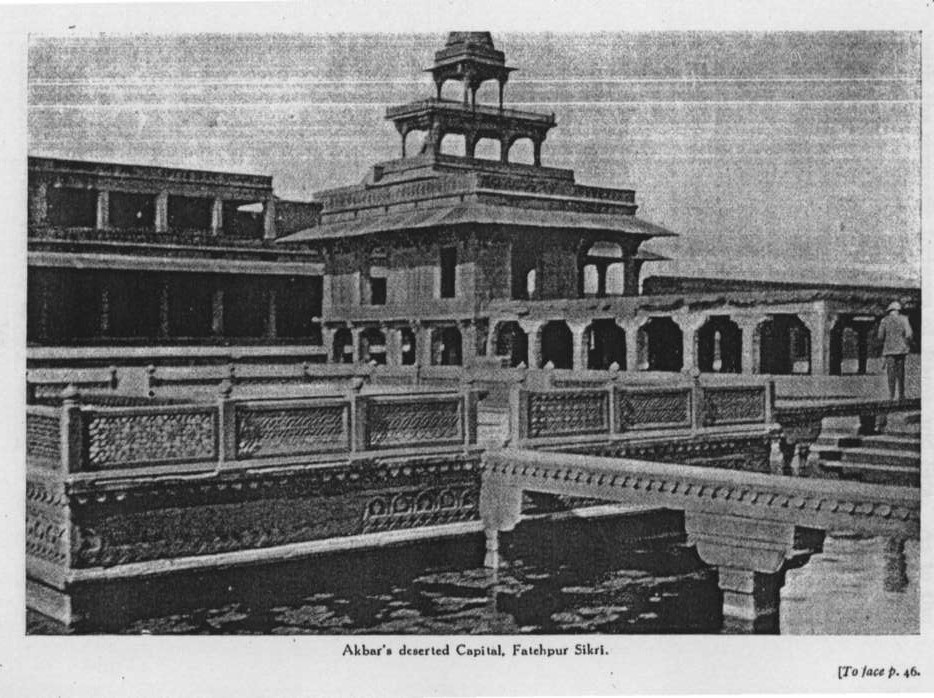
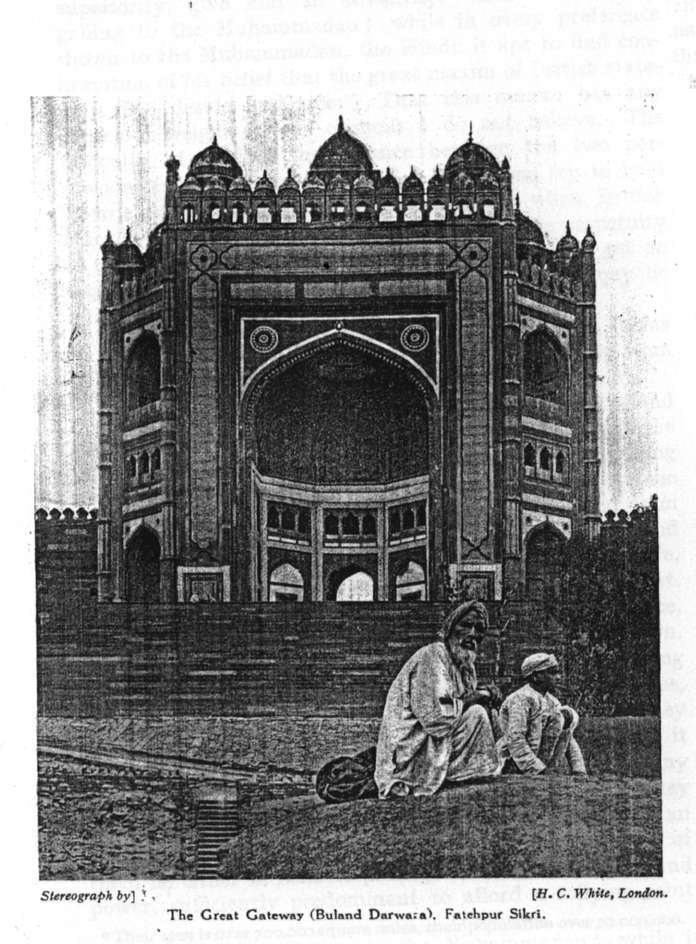
In any case, the presence of Islam in India scarcely lightens the enormous unifying pressure of Hinduism. An emanation from the sacred soil of Aryavarta, it has absorbed all previous cults, and has constituted, from the beginning of recorded time, the whole mental atmosphere of an overwhelming majority of the population. If we include some 3,000,000 Sikhs, 1,250,000 Jains, and about 250,000 members of the Arya and Brahmo reforming sects, the Hindus of to-day number nearly 222,000,000, as against something less than 67,000,000 Mussulmans. And the predominance of Hinduism is by no means expressed in these numbers. Millions of the Mussulmans are extremely ignorant of their own religion and enormously influenced by surrounding Hinduism. To many adherents of each creed, in fact, the only salient and tangible difference between them lies in the circumstance that the one holds cows sacred and the other does not. Again, the educated Mussulman does not withhold his admiration from the religious, philosophic and epic literature of the Hindus. He takes pride in it as the literature of India: just as the educated Hindu reckons the Taj and Fatehpur Sikri among the glories, not of Muslim, but of Indian architecture. In short the fact that India has in Hinduism an indigenous and extremely ancient religion, absolutely peculiar to herself, is in no way cancelled by the fact that about a quarter of the population have, in comparatively recent centuries, become dissenters from it. Hinduism is, and will remain, a mighty bond of union. There is nothing local or parochial in its spirit. " To the Hindu Of all provinces, his Motherland is the seat of holiness, the chosen home of righteousness, the land of the seven sacred rivers, the place to which, sooner or later, must come all souls in quest of God.' "
After my account of the temple at Madura and of the sacrifice to Kali, I shall scarcely be suspected of an exaggerated esteem for Hindu ritual. In another chapter, I shall have to go further and confess to the gravest doubts as to the supreme value of Hindu philosophy, and, in general, as to the spiritual genius which Hindus are fond of claiming for themselves, and which we Westerners, I cannot help thinking, too lightly admit. Still more hereti-cally, perhaps, I shall have to inquire whether the great epics, the Mahabharata and the Ramayana, are, in fact, wholesome mental sustenance for a people which aspires to play an independent part in the drama of the future, upon the stage of the real world. But whatever may be our private doubts as to the value of Indian literature, especially in relation to the problems of the coming age, there is not the least" question that India does possess a literature of immense historic interest, to which many great scholars, and some great critics, have assigned a very high rank among the literatures of the world. We are assured, too, that the influence of this literature has filtered down through the whole mass of the people—-that the most illiterate, fetish-worshipping peasant is conversant with lofty spiritual ideas, and (more credibly) that
he is familiar with the doughty deeds of the Pandus, and with the romantic fortunes of Rama and Sita. As to the depth of his metaphysics I remain unconvinced; but there is no doubt that all Indians are conscious of having behind them a great religious and legendary—or, as they think, historic—literature. To the Brahmins -has been confided the care of. the spiritual treasures left behind by their forefathers, while the loves and exploits of the national heroes have, in one form or another, become common property. The unifying influence of this living literary tradition must be apparent; and it cannot be supposed that even low-class Muhammadans remain quite outside it. Many of those who, in the Mohurrum, rend the air with their frenzied shouts of " Ya Hasan ! Ya Hosein! " are perhaps, in reality, more intimate with Arjuna and Krishna than with the saints of their own religion.
We see, as a matter of historic fact, that no outside influence is needed to make the two religions pull fairly well together. The horrors of Muslim conquest and the persecutions of Aurungzebe are things of the remote past. Before we established ourselves in India, Muhammadan princes ruled over Hindu subjects, and Hindu princes over-Muhammadan subjects, with very tolerable impartiality of rule or misrule. And the same is true in the native states of to-day, not merely as a result of British overlord-ship. . At no time since the days of Aurungzeb has either religion seriously tried to overpower and cast out the other. The attempt, supposing it possible, would have been too manifestly ruinous and suicidal-. That there should be friction and occasional rioting between Hindu and Muhammadan is only natural. We have seen ignorant fanaticism lead to religious faction-fights nearer home. Nor is there anything surprising in the bitter squabbles of the two creeds over the loaves and fishes of government employ. The greater suppleness and (as a rule) the better education of the Hindu, to say nothing of his numerical superiority, give him an advantage which is naturally galling to the Muhammadan; while in every preference shown to the Muhammadan, the Hindu is apt to find confirmation of his belief that the great maxim of British statecraft is " divide and rule." That this maxim has any conscious weight in our councils I do not believe. The difficulty of holding the balance between the two persuasions is no fault of ours, and I believe we try to hold it true without any ulterior motive. But when British officials, undreaming of any other ideal than the perpetuity of the raj, assure us that " cat and dog will never get on together," I would not swear but that the wish may be father to the thought.
Cat and dog got on well enough together in 1857. It was not any religious dissension that saved the sahibs from being driven into the sea.
In one regard, however, it must be admitted that England has in effect, though not in outward form, adopted the principle of " divide and rule." In her policy of maintaining nearly four score native states* under her suzerainty, she has, not exactly divided, but deliberately abstained from unifying. The rulers of these principalities, large and small, are, as a whole, genuinely loyal to the Empire, and sincerely opposed to any idea of self-government. They see in British rule (quite justly) a conservative force, and they dread and shrink from the New India, unknown, untried, and to them unimaginable, which is germinating in the brains of political agitators. In a double sense, then, the native states are bulwarks of the Empire. They not only strengthen it- in the present, but they make it difficult to conceive the place they are to occupy in any non-autocratic organization of the future. Nor do they render it possible to dream of a national autocracy, an Indian Empire under an Indian Emperor. Not one of them is, either in historic prestige or in actual wealth and power, sufficiently predominant to afford a rallying-point
* Their area is over 700.000 square miles, their population over 70,000,000. for any aspirations of this order ; and, in fact, no such aspirations exist. There are no Indian Jacobites or Carlists. It is conceivable, no doubt, that a United India might choose to call itself an Empire, and might enthrone as Emperor one of its princes. But if so, it would be by reason of some personal merit or preponderance, not of any revival of historic loyalty.
If England had incorporated all the native states with her own immediate dominions, she would have enormously facilitated the movement towards national unity. The mingling of moderation and astuteness which prevented her from doing so will probably prolong her rule in India, and that, very likely, to the great ultimate benefit of the country. The chief danger which India has to fear is the premature dissolution of her dependence on Britain. But the obstacle of the native states cannot for ever bar the way to unity. Times change and even maharajas change with them. It was a maharaja who, speaking to Mr. Pryce Collier, " hinted at a federation of states under a central government."
To sum up the argument of the present chapter : India is one of the most clearly-marked geographical units in the world. Nature could scarcely have individualized her' better if, instead of a half-island, she had made her a whole-island. There is, indeed, much diversity of race and language within her bounds, but that has not hindered a very marked unity of cult and custom. All Indians have been Indians, and as such, definitely related to each other and distinguished from the rest of the world, for a much longer time than Englishmen have been English, Frenchmen French, or Germans German. The numerous attempts to translate into terms of political organization the geographical unity of the country have hitherto failed disastrously, for the simple reason that the country was too huge. In the days when there were few roads and no railways, it was impossible for a central power to hold its lieutenants in control, and an empire was no sooner formed than it began to disintegrate. But roads, railroads and telegraphs have changed all that. The British rule, bringing these things with it,* reduced India to a manageable size. It has made unity a political as well as a geographical and spiritual fact, and it has thereby begotten a sentiment of unity which it is folly to ridicule as factitious or denounce as seditious. Why should we dream that three hundred millions of people who are, in the main, able-bodied, and whom we are honestly, if not too efficiently, striving to render able-minded, should go on to the end of time " obeying orders given in a foreign accent ? " Why stake our national prestige on achieving so undesirable a miracle ? Especially when our national glory so obviously lies in the opposite direction—in the building up of a united, self-controlled, virile and responsible India.
* Indian malcontents are apt to resent such statements as this, on the ground that India would no doubt have had railroads and telegraphs even if British rule had never existed. That is true : European capital would no doubt have rushed in to some extent, whatever had been the political conditions of the country. But the spread of these material adjuncts and forerunners of civilization has been enormously facilitated by the unity and peace of the country ; and unity and peace it woutd certainly not have had except under British, or some other external, rule. And undoubtedly the necessary capital has been obtained at a far cheaper rate than would have been possible under other political conditions. (1917). |